




Angle Bed Solutions for Hospitals, Nursing Homes, and Healthcare Projects
This guide shows you where to put an Angle bed in healthcare accommodation projects, nursing homes, hospitals, and serviced apartments. It also includes questions about safety, upkeep, customization, planning the project, and checking the provider. The purpose is useful: to help buyers choose if this design works for their project and choose it in a smart way.
As for your project inquiry, Azz Furnishings can talk about their Angle bed manufacturer program, which includes custom sizes, upholstery, lighting, and making a lot of beds at once. Send shiyingfan826@gmail.com the location of your project, the type of room it is in, the amount you want, and the materials you'd like to use.
What Are Angle Beds and How Do They Work?
What does “Angle bed” mean in furniture design?
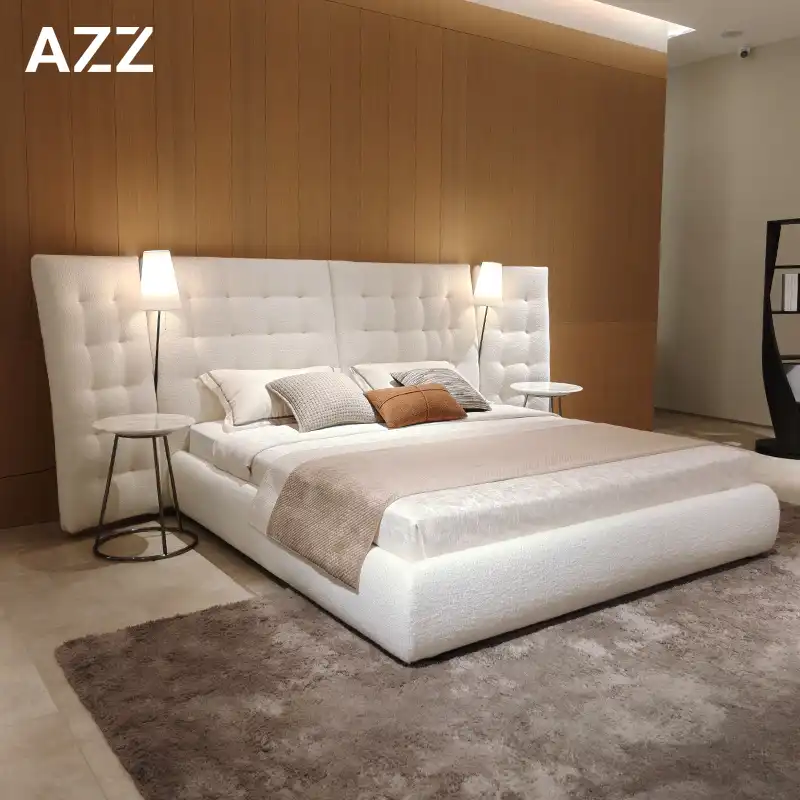
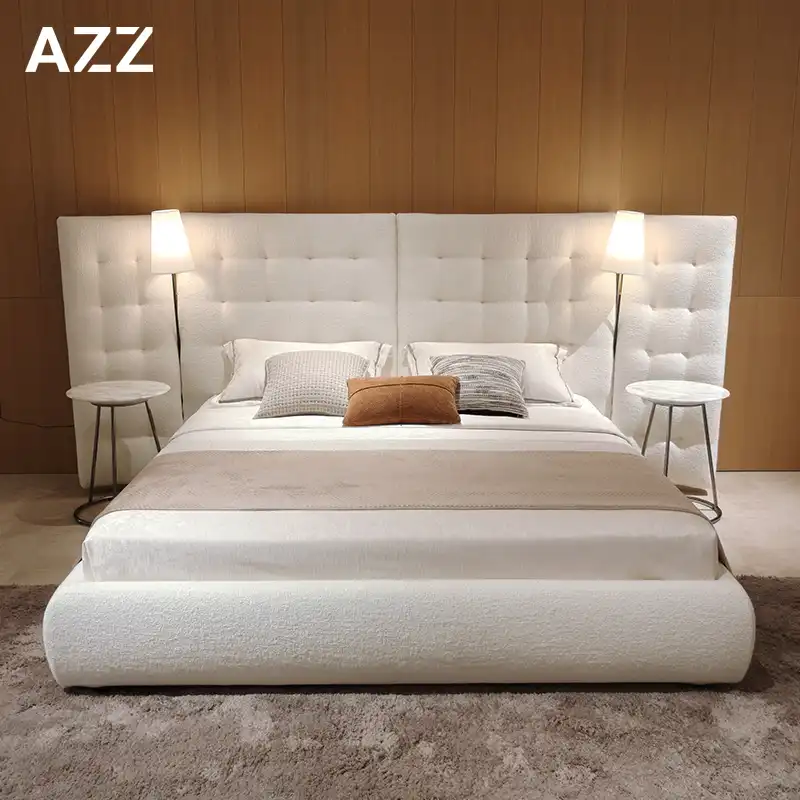
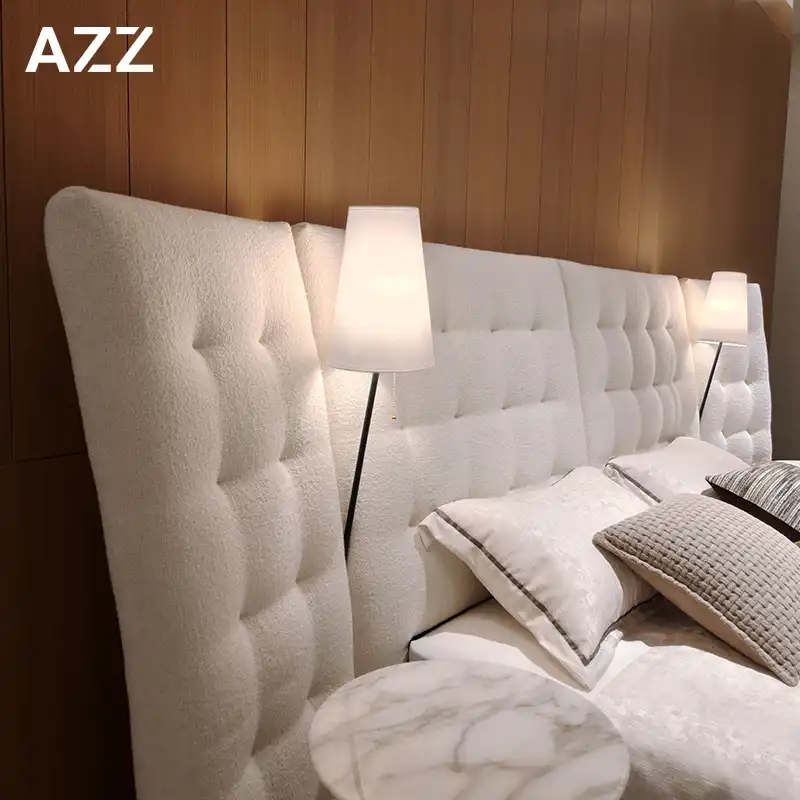
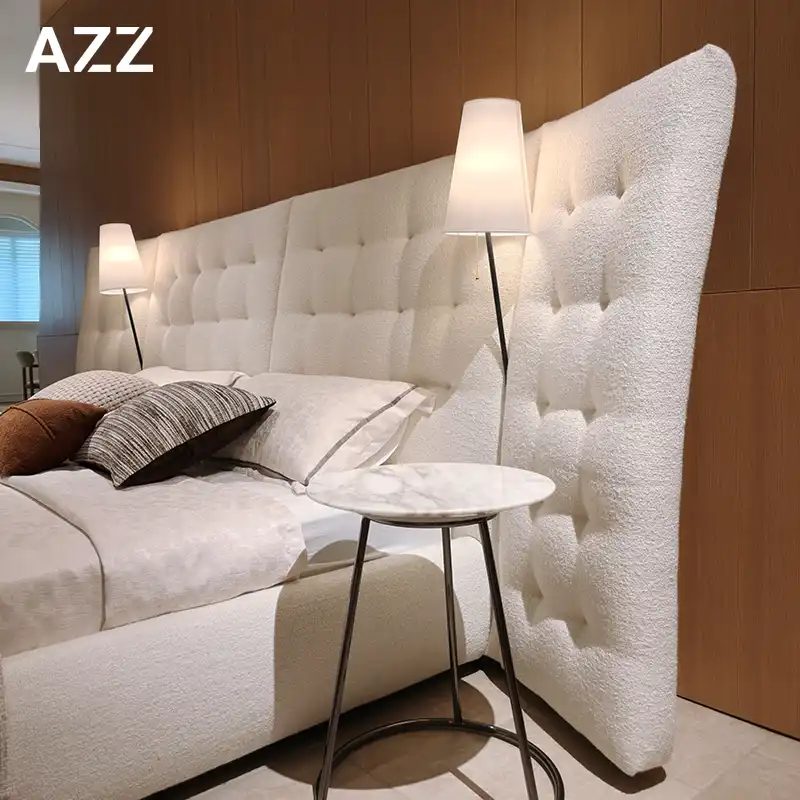
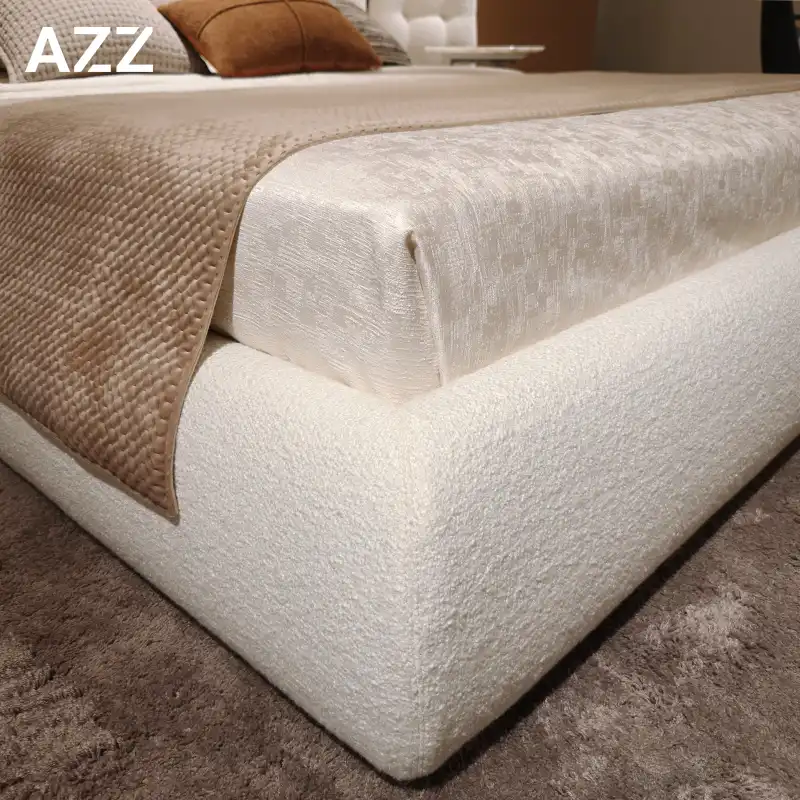
The AZZ MD-AM904 double bed is what this article calls an "angle bed." It is a high-end Italian minimalist bed with a geometric padded top and adjustable side panels. The name refers to the way the headboard, side pieces, and bed base look together and how they are sunken into each other. That doesn't mean the mattress platform can tilt like a hospital profiling bed.
The usual sizes are 2300 mm x 3160 mm x 1320 mm. It is made to fit a cushion that is 1.8 m x 2.0 m. A strong visual frame is made around the sleeping area by the large overall footprint. For healthcare projects, this makes it better for private suites, assisted-living bedrooms, rehabilitation residences, serviced apartments, and family housing than for small wards with a lot of beds.
How is the design structured?
The form blends several parts into a single, well-balanced whole:
- The structure is built on a base made of Russian larch wood.
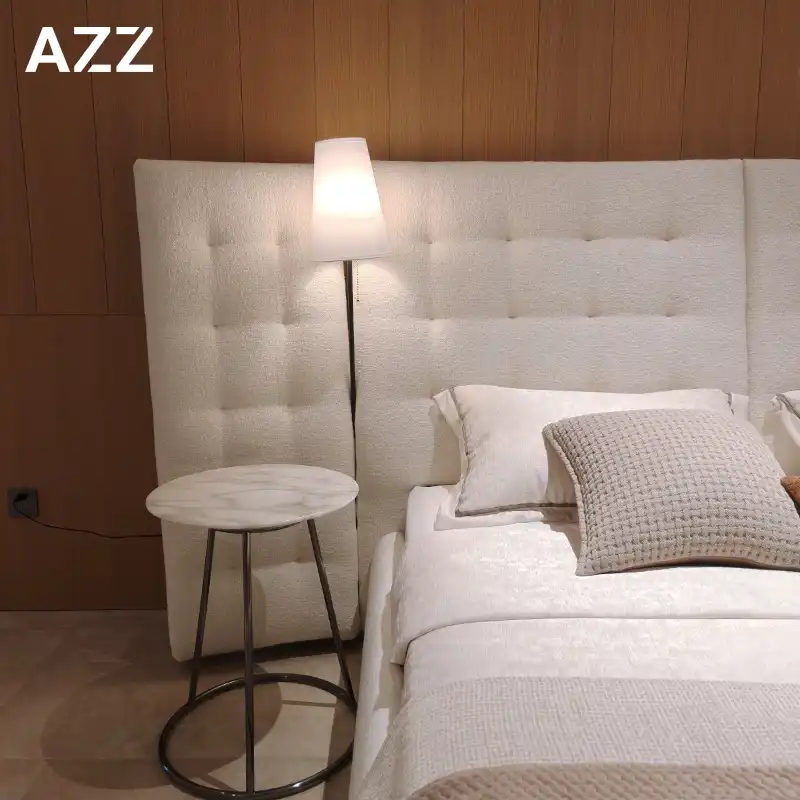
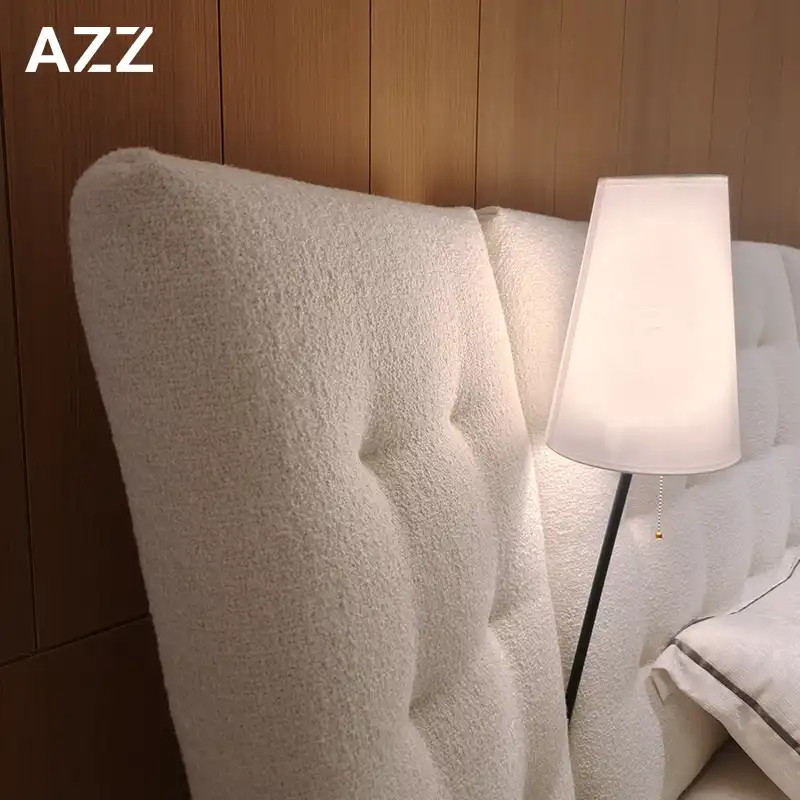
- A quilted and padded headboard supports your back while you read or sit.
- You can choose to have side walls instead if you want to.
- Two tube floor lamps can fit in recessed places.
- Covers for bedspreads made of fabric or leather can be taken off.
- Lamps with chrome, gold, or copper finishes change the mood of the room.
The layout helps the people in charge of the project handle more than just the bed. It also arranges the lighting, color balance, and storage in a way that looks good. Because the lights are built into the bed rather than being put on top of the table, the tableside table can stay less crowded.
Is an Angle bed a medical bed?
Not at all. The AZZ Angle bed is a piece of furniture. It's not sold as a medical device, an emergency bed, a pressure-relief bed, or an adjustable care bed. It doesn't take the place of equipment that was made for placing, moving, protecting the side rails, adjusting the height, or clinically tracking patients.
In project documents, this difference should be made clear. The project team should mention a qualified healthcare bed separately if a room needs to be used for medical purposes. The AZZ bed could then be used as a design-led bed in rooms that don't need clinical bed functions.
The Medical Devices Regulation (EU) 2017/745 from the European Commission helps explain why the planned use of a product is important when deciding how to group it. Before putting any furniture into a clinical setting, buyers should look at the laws that apply in the final destination market. The European Commission source at the end of this piece talks about this point.
What Are the Key Benefits of Angle Beds in Healthcare Facilities?
Can an Angle bed make a healthcare room feel less institutional?
A lot of healthcare projects need rooms that are quiet and feel like homes. This is true for private recovery suites, nursing homes, rehabilitation centers, and assisted living facilities. A standard hospital bed with a metal frame says right away what it's for. In a professional setting, that look might work, but in a private room meant to feel like home, it might not.
With an angle bed, you can use softer materials, create layered shapes, and control the lighting. The cushioned bed makes the room feel like a home. The wood base makes it look warmer. The recessed lamp location makes the furniture look like a whole piece instead of a bed with separate pieces of equipment around it.
This doesn't change how useful the room is on its own. It changes how you feel and what you see around where you sleep. This method can be used by designers when the project's care model allows for residential-style housing.
How does removable upholstery reduce maintenance pressure?
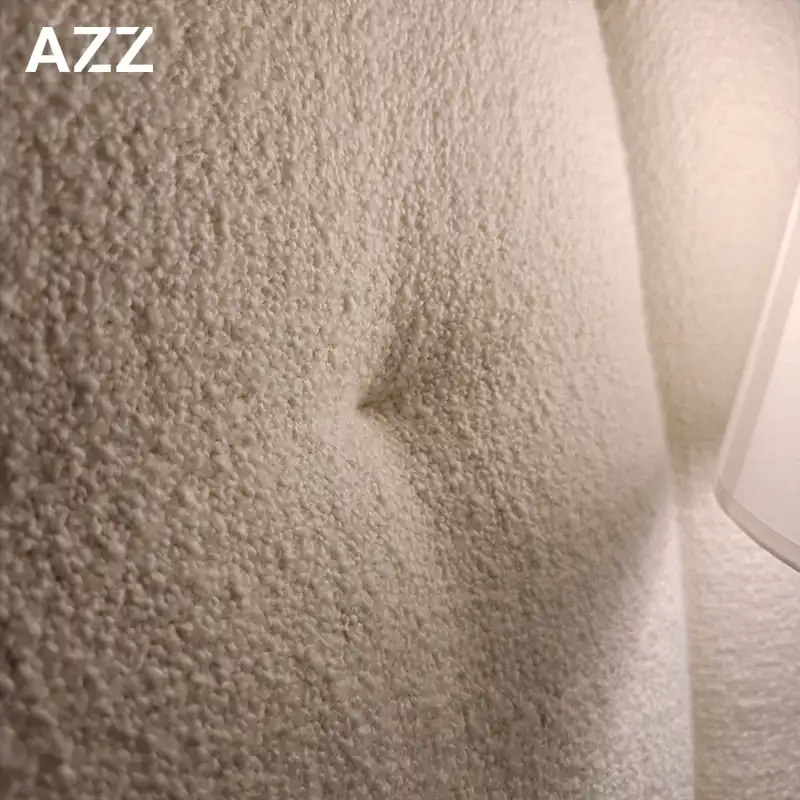
It is easy to take off the cloth or leather covering. In housing projects, this trait is important because the fabric usually gets worn out faster than the solid frame. People who live there can bring their own bags, wheelchairs, mobility aids, food, and other personal items into their rooms. People may also lean on the bed or side walls.
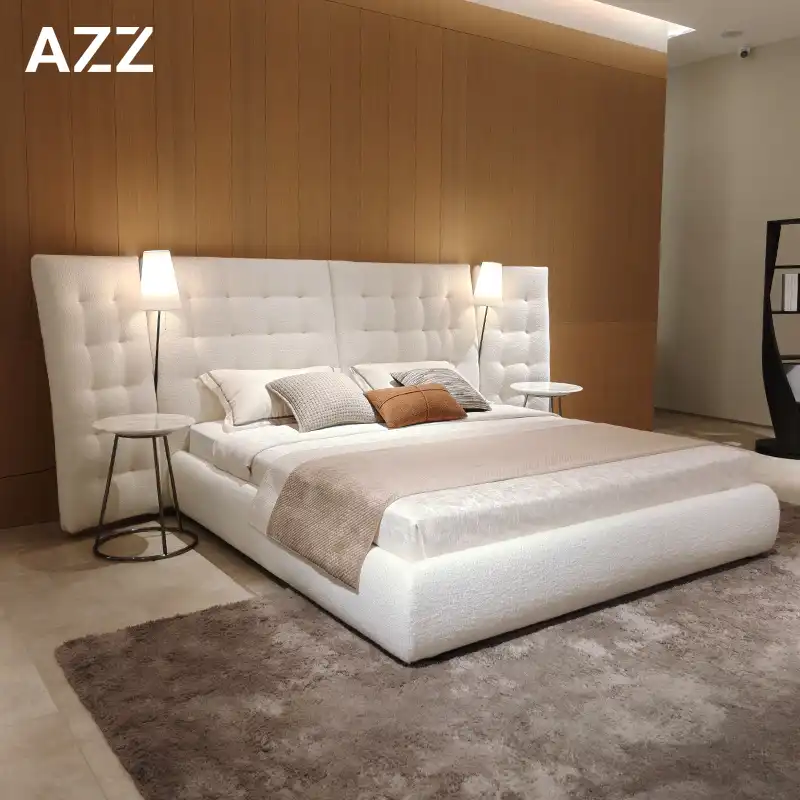
A cover that can be taken off lets the operator:
- Get rid of specific stains without having to buy a new bed.
- Save extra covers in case you need to change the room.
- While the building is being fixed up, change the colors.
- Keep upkeep for the fabric separate from repairs to the structure.
- Cut down on downtime when one cover needs to be cleaned by a professional.
The seller should give clear instructions on how to take care of the chosen fabric or leather. Regular sweeping with an upholstery tool and quick spot cleaning are needed for fabric covers. Leather versions need to be cleaned with the right cleaner and conditioned every so often. Chemicals that are too harsh can hurt either surface.
The savings are not always 40%, 30%, or some other set amount. The cost of maintenance is based on the hourly rate, the cleaning contract, the type of cover, local rules, and substitute policies. Instead of relying on a generic lifecycle claim, a responsible project specification should ask for a maintenance schedule and a quote for spare parts.
Does integrated lighting offer a practical project advantage?
With integrated lighting, you may not need as many separate fixtures by your bed. Two tube floor lamps can be put in the Angle bed's recesses between the top and side panels. People can pick finishes in chrome, gold, or copper.
This trait makes three useful things possible:
- It helps designers put the lights in a way that looks good next to the bed.
- This makes the tables next to the beds bigger.
- It makes a feature that can be seen in model rooms and shops.
In a care home, the placement of lights must still allow people to move around safely. The project team needs to look at switches, how cables are routed, glare, heat, emergency lighting, and how easy it is to clean. Integrated lighting is part of the plan; it's not a replacement for room lighting that meets building codes.
Angle Bed vs Standard Hospital Bed: What Are the Differences?
What does a standard hospital bed provide?
Standard medical beds are made to meet practical needs. Based on the type, it might have locking wheels, side rails, patient transfer support, the ability to change the height electronically, the ability to place the seat, the ability to raise the knees, and the ability to work with medical devices.
An angle bed is worth something different. Its strong points are its form, fabric, built-in lights, flexible look, and comfort for home use. It's not made to support clinical procedures or moving patients around.
A procurement team shouldn't just look at how the products look; they should also look at what they're meant to do.
| Evaluation area | AZZ Angle bed | Typical hospital bed |
|---|---|---|
| Primary purpose | Residential-style bedroom furniture | Patient care and clinical positioning |
| Mattress format | 1.8 m × 2.0 m double mattress | Often single clinical mattress sizes |
| Height adjustment | Not specified | Common on electric care models |
| Side rails | Not specified | Available on many clinical models |
| Upholstery | Fabric or leather removable cover | Usually cleanable medical-grade surfaces |
| Lighting | Optional integrated floor lamps | Separate clinical or room lighting |
| Visual character | Italian minimalist furniture | Clinical and functional |
| Best project fit | Private suites, assisted living, healthcare hospitality | Wards, treatment rooms, clinical care areas |
This comparison helps prevent an expensive specification error. A visually attractive furniture bed cannot replace a medical bed where clinical functions are required.
When can the two products work together?
Some healthcare developments use different room types within one property. A clinical ward may need hospital beds. A private family suite, staff residence, rehabilitation apartment, or visitor accommodation area may use residential furniture.
In that arrangement, anAngle bedcan support the hospitality side of the project. It can also create a design bridge between healthcare and hotel environments. The same upholstery palette, wood tone, and lamp finish can continue into lounges, family rooms, or serviced apartments.
Designers should keep the specification boundaries clear. Clinical areas need clinical equipment. Residential areas can use furniture selected for comfort, maintenance, proportion, and visual identity.
Which Patients Benefit Most from Using Angle Beds?
Are Angle beds suitable for nursing home residents?
They may suit nursing home rooms where the resident uses a standard mattress and does not require a medical positioning system. A nursing home buyer should consider the resident profile, transfer method, fall-risk policy, cleaning procedure, and room dimensions before approving the design.
The upholstered headboard can make a private room feel more personal. The removable cover supports planned maintenance. The modular option can help designers fit the bed into different room layouts.
However, a care provider should not assume that a residential bed is appropriate for every resident. People who need height adjustment, side rails, assisted transfer, or pressure-management equipment may require a certified care bed.
Could an Angle bed work in rehabilitation residences?
Rehabilitation residences often combine clinical support with a residential environment. Residents may stay for weeks while regaining independence. Their rooms may include a bed, seating, storage, and accessible circulation space.
TheAngle bedcan work in the hospitality portion of this model if the room does not require medical bed functions. The project team should confirm that the overall footprint leaves adequate clearance for mobility aids and caregiver access.
The standard 3160 mm width is substantial. That dimension may suit a premium suite, but it may not suit a narrow room. Azz Furnishings offers customization of dimensions, materials, colors, and modular combinations. Custom sizing should be agreed during the design stage, not after production begins.
Is it suitable for private hospital rooms?
A private hospital room may require a clinical bed even when the room has a luxury design direction. In that case, theAngle bedshould only be considered where the hospital’s clinical team confirms that a furniture bed is suitable for the room’s intended function.
Another possible application is a family sleeping area within a private suite. Some projects provide separate accommodation for relatives or visitors. The bed can support that hospitality function while the patient uses approved clinical equipment.
This separation allows designers to bring residential character into the suite without compromising patient-care requirements.
How Do Angle Beds Improve Comfort and Patient Care?
What type of comfort does the design provide?
The comfort offered by anAngle bedis furniture comfort, not medical treatment. The high-density sponge filling supports the upholstered headboard when users sit up to read, rest, or talk with visitors. The padded surface is more comfortable than a bare wall or hard panel.
The large headboard also creates a visual anchor. In a private room, that anchor can make furniture placement easier because the bed becomes the center of the composition. Designers can coordinate wall color, bedside tables, curtains, and lighting around it.
Can the bed support family-centered care environments?
Family presence matters in many healthcare settings. A room that feels cold or temporary can discourage longer visits. A residential-style bed, coordinated lighting, and soft upholstery can create a more welcoming setting for conversation and rest.
This design approach should support, not replace, practical planning. Designers still need to consider:
- Clear routes around the bed.
- Easy cleaning access.
- Power and lighting controls.
- Mattress replacement.
- Bedside equipment.
- Emergency access.
- Privacy curtains or partitions.
The World Health Organization’s guidance on age-friendly environments emphasizes the importance of accessible, safe, and supportive physical settings. It does not approve any specific furniture model. It provides a useful planning principle: room design should support the needs of users rather than focus only on appearance.
What should designers avoid claiming?
Designers should avoid saying that theAngle bedprevents falls, improves clinical outcomes, treats pain, or replaces medical equipment. Those claims require clinical evidence and may create regulatory risk.
Accurate claims include:
- The upholstered headboard supports sitting comfort.
- The removable cover can simplify maintenance planning.
- The integrated lamps can reduce bedside clutter.
- The modular design can support project-specific room layouts.
- The wood base and high-density filling create a premium furniture specification.
Precise language builds trust with healthcare procurement teams.
What Features Should Hospitals Consider When Choosing Angle Beds?
How important are dimensions and circulation?
The standard MD-AM904 size is 2300 mm × 3160 mm × 1320 mm. The mattress size is 1800 mm × 2000 mm. This is a generous double-bed format.
A large bed can create a premium room experience, but it also uses valuable floor area. Before specifying it, the designer should draw:
- Bed footprint.
- Mattress replacement path.
- Door and corridor clearance.
- Wheelchair turning space.
- Caregiver access.
- Bedside table position.
- Cleaning access.
- Lamp access.
- Emergency route.
A 1:1 floor marking or digital 3D model can reveal problems quickly. Azz Furnishings supports 3D design and prototyping for faster visual confirmation. This is useful when a developer needs to approve room proportions before placing a production order.
Which upholstery material is better?
Fabric provides texture, color range, and a softer visual effect. Leather offers a different appearance and may support wipe-clean routines, depending on the selected finish and healthcare requirements. Neither material should be approved without reviewing its technical data.
Ask the supplier for:
- Abrasion resistance.
- Colorfastness.
- Cleaning compatibility.
- Seam construction.
- Fire performance documentation.
- Chemical resistance.
- Replacement-cover availability.
How should lamp options be selected?
Chrome creates a cooler, contemporary look. Gold adds warmth. Copper or bronze creates a softer, refined finish. The finish should match the wider hardware schedule, including door handles, faucets, bedside fittings, and wardrobe details.
The lamp itself also needs technical review. Confirm:
- Rated voltage.
- Bulb or LED specification.
- Switch location.
- Cable route.
- Heat management.
- Cleaning method.
- Replacement parts.
- Local electrical compliance.
Azz Furnishings can customize the lamp position and finish. Electrical installation should still be completed or approved by qualified professionals in the destination country.
How to Select the Right Angle Bed for Nursing Homes and Projects?
What should be included in the project brief?
A clear brief reduces revisions and protects the production schedule. I recommend including:
- Project type and room function.
- Target country and applicable regulations.
- Room drawings.
- Mattress size.
- Required bed quantity.
- Upholstery material.
- Color references.
- Lamp finish.
- Cleaning expectations.
- Delivery destination.
- Installation responsibility.
- Spare-cover requirements.
- Inspection procedure.
How does customization support healthcare projects?
Healthcare projects rarely use one standard room. A private suite may need a large double bed. A serviced residence may need a narrower version. A nursing home may need a more practical fabric and a simplified lamp configuration.
Azz Furnishings offers modular combinations, custom dimensions, materials, and colors. This flexibility allows a project team to create a core design language while adapting the bed to different room types.
Customization should not begin with color alone. The better process starts with room function, cleaning method, circulation, and maintenance access. Aesthetic decisions then follow the operational requirements.
What supplier evidence should buyers request?
A healthcare project should not rely on photographs alone. Request:
- Factory profile.
- Material samples.
- Construction drawings.
- Upholstery test information.
- Production schedule.
- Inspection checklist.
- Packaging details.
- Installation instructions.
- Replacement-cover pricing.
- After-sales process.
Azz Furnishings was established in 2018 in Foshan, Guangdong. It operates a 20,000-square-meter showroom and a 50,000-square-meter factory. The company combines design, R&D, production, and sales.
Its production system includes ERP-based material traceability and 6S production management. The factory covers upholstered furniture, panel furniture, hardware, and luxury categories, including customized Angle bed solutions. Buyers can visit the showroom and factory to review design, materials, workmanship, and quality-control procedures.
What Safety Standards Should Healthcare Angle Beds Meet?
Which standards apply to furniture beds?
The applicable standards depend on the product’s intended use and destination market. A furniture bed may need requirements related to structural stability, flammability, electrical safety, materials, and chemical emissions. A medical bed may fall under a different regulatory framework.
The project team should identify the destination requirements before finalizing the specification. Relevant review areas may include:
- Structural strength and stability.
- Mattress support.
- Upholstery flammability.
- Electrical components.
- Surface emissions.
- Chemical restrictions.
- Cleaning chemicals.
- Packaging and labeling.
- Accessibility and room clearance.
The European Chemicals Agency’s REACH framework is relevant when buyers assess chemical substances placed on the European market. It does not certify a finished bed by itself. It helps procurement teams ask better questions about materials, coatings, adhesives, and treated textiles.
Does a furniture product need medical-device approval?
Not automatically. The answer depends on intended purpose, claims, design, and local law. If a supplier markets a product for diagnosis, prevention, monitoring, treatment, or patient support, additional rules may apply.
The AZZAngle bedshould be specified as furniture unless the supplier and regulatory specialists confirm another classification. Buyers should avoid adding clinical claims to marketing materials without evidence.
What should an inspection cover before shipment?
Azz Furnishings conducts a remote inspection with the customer before shipment. Products are packaged and shipped after the customer confirms the result.
A useful inspection should cover:
- Overall dimensions.
- Upholstery color and stitching.
- Cover removal.
- Headboard firmness.
- Base alignment.
- Lamp position and finish.
- Hardware condition.
- Surface scratches.
- Packaging protection.
- Quantity and accessories.
This confirmation step is especially helpful for international projects. It gives the buyer a documented opportunity to check the order before it leaves the factory.
How Are Angle Beds Used in Modern Healthcare Facility Design?
Scenario 1: Premium rehabilitation suite
A rehabilitation provider wants rooms that feel closer to serviced apartments than hospital wards. The project includes a double bed for family accommodation, a separate clinical care area, and soft lighting.
TheAngle bedcan anchor the residential sleeping zone. The removable fabric cover supports planned maintenance. The integrated lamps create a clear reading and conversation area. The supplier can adjust the dimensions if the standard 3160 mm width does not suit the room.
The clinical equipment remains separate. This division lets the designer create a warmer room without presenting furniture as medical equipment.
Scenario 2: Nursing home private room
A nursing home develops private rooms for residents who do not need an adjustable clinical bed. The design brief calls for natural wood, quiet colors, and furniture that feels familiar.
The Russian larch base and upholstered headboard support that direction. The project manager can select a durable fabric, specify a practical color, and keep spare covers for future room turnover. The lamp option can be simplified if the operator prefers wall switching or centralized electrical control.
The buyer should confirm resident mobility needs and cleaning procedures before approval. The product works best where the room’s care model allows residential furniture.
Scenario 3: Healthcare hospitality and family accommodation
A private hospital adds family suites near a treatment center. Relatives may stay overnight, but the room does not need to function as a patient ward.
Here, theAngle bedprovides a premium furniture solution with strong visual identity. The choice of chrome, gold, or copper lamp finish can align with the hotel-style interior. The removable cover helps housekeeping teams maintain the room between stays.
This application also creates an opportunity for importers. The integrated lighting and two-style option give the product a clear showroom story. Buyers can display the minimalist headboard version beside the side-panel version to show how one product platform creates different room moods.
What Trends Are Shaping the Future of Healthcare Angle Beds?
Are healthcare projects moving toward residential design?
Many senior living and rehabilitation projects are moving toward hospitality-style interiors. This does not remove the need for safety or clinical equipment. It changes how common areas, private rooms, family suites, and visitor accommodation are designed.
The trend creates demand for furniture that combines comfort, cleanability, modularity, and visual consistency. AnAngle bedfits this niche when the project clearly separates residential furniture from medical equipment.
Will removable components become more important?
Yes, maintenance teams increasingly look at repairable and replaceable components. A removable cover is easier to manage than a fully fixed upholstered surface. It can support spare-part planning, color updates, and targeted refurbishment.
The project team should ask how many spare covers to order. A practical starting point is to calculate expected room turnover, cleaning frequency, and local textile-service capacity. The correct reserve level differs by project.
Will customization become part of standard procurement?
Healthcare projects vary widely by room size and resident profile. Standard products reduce cost and lead time, but modular customization helps designers manage unusual layouts and brand standards.
Azz Furnishings uses 3D design and prototyping to present proposed effects quickly. Its ERP system supports material traceability, while factory production covers upholstery, panel, hardware, and high-end furniture categories. The company also supports small-batch customization and stable large-volume supply.
What should global buyers expect from the supplier relationship?
A global furniture buyer needs more than a product catalog. The supplier should provide:
- Clear specifications.
- Consistent material sourcing.
- Sample approval.
- Production updates.
- Pre-shipment inspection.
- Export packaging.
- Delivery planning.
- After-sales communication.
- Replacement-part support.
Azz Furnishings offers a factory and showroom visit, remote inspection before shipment, and project-based customization. Buyers can use these services to reduce uncertainty before committing to a multi-room order.
Conclusion
The AZZAngle bedoffers a design-led solution for healthcare hospitality, assisted-living rooms, rehabilitation residences, family suites, and other residential-style projects. Its value comes from the combination of Italian minimalist geometry, a Russian larch base, high-density sponge, removable fabric or leather covers, optional side panels, and integrated lamp positions.
It is not a medical bed and should not replace clinical equipment. That boundary is important. When the room requires a standard mattress, residential comfort, clear maintenance planning, and a strong interior identity, the product can give designers useful flexibility.
Azz Furnishings supports custom dimensions, modular combinations, materials, colors, and lamp finishes. The company’s 20,000-square-meter showroom and 50,000-square-meter factory allow buyers to review the design and production process directly. Production takes about eight weeks, while delivery depends on the destination and local import conditions.
FAQ
Is the AZZ Angle bed a hospital bed?
No. It is a premium furniture bed, not an adjustable medical bed. It does not replace clinical equipment with height adjustment, side rails, patient-transfer functions, or medical positioning controls.
Can the Angle bed be customized for a healthcare project?
Yes. Azz Furnishings offers customization of dimensions, modular combinations, materials, colors, upholstery, and lamp finishes. Buyers should provide room drawings and operational requirements before confirming the design.
Are the fabric and leather covers removable?
Yes. The bedspread covers use concealed zippers and secure attachment points. Fabric covers require upholstery care and prompt spot cleaning. Leather covers require suitable leather cleaner and conditioner.
What mattress size does the standard model use?
The standard MD-AM904 model is designed for a 1.8 m × 2.0 m mattress. The overall bed dimensions are 2300 mm × 3160 mm × 1320 mm.
Which healthcare projects suit this bed?
It may suit private rehabilitation suites, nursing home rooms without clinical bed requirements, healthcare hospitality rooms, family accommodation, serviced residences, and premium assisted-living projects.
What lamp finishes are available?
The integrated tubular lamps can be specified in chrome, gold, or copper-colored finishes. The project team should confirm electrical specifications and local compliance before installation.
How long does production take?
The stated production time is approximately eight weeks. Delivery time varies by destination country, city, port proximity, and local legal or customs requirements.
Can buyers inspect the furniture before shipment?
Yes. Azz Furnishings conducts a remote inspection with the customer before shipment. Products are packaged and dispatched after customer confirmation.
Where is the product made?
The product is made in China. Azz Furnishings is based in Foshan, Guangdong, and operates its own showroom and factory facilities.
Planning an Angle Bed Specification With Azz Furnishings
Azz Furnishings can support healthcare developers, nursing home operators, hospitality groups, interior designers, and global furniture importers. Share your room drawings, target quantity, mattress size, upholstery preference, and destination. The team can prepare anAngle bed for saleproposal with customization options, production timing, material samples, and inspection arrangements. Contactshiyingfan826@gmail.comto begin the discussion.
References
1. European Commission, 2017 — Regulation (EU) 2017/745 on Medical Devices.
Used in this article to explain why intended use and medical claims matter when distinguishing furniture from medical devices.
https://eur-lex.europa.eu/eli/reg/2017/745/oj
2. European Chemicals Agency, 2024 — Understanding REACH.
Used in the safety section to explain chemical-substance evaluation for products placed on the European market.
https://echa.europa.eu/regulations/reach/understanding-reach
3. World Health Organization, 2007 — Global Age-Friendly Cities: A Guide.
Used in the comfort and care section to support planning around safe, accessible, and supportive environments for older users.
https://www.who.int/publications/i/item/9789241547307
4. U.S. Access Board, 2010 — 2010 ADA Standards for Accessible Design.
Used in the room-planning section to highlight the need to review circulation, clear floor space, and accessibility requirements in applicable US projects.
https://www.access-board.gov/ada/
5. Business and Institutional Furniture Manufacturers Association, 2024 — BIFMA Standards.
Used in the procurement section as a reference point for furniture performance and safety standards. Applicable standards should be confirmed according to product type and market.
https://www.bifma.org/page/standards
6. Azz Furnishings, 2024 — MD-AM904 Product and Company Information.
Used for the product dimensions, materials, customization options, production time, showroom, factory, inspection process, and company capabilities described in this article.
https://mdazzhome.com/
Author
Guan Yan — Senior Soft Furnishing Stylist
Guan Yan specializes in residential-style interiors for hospitality, senior living, serviced residences, and high-end development projects. Her work focuses on furniture proportion, upholstery selection, lighting coordination, maintenance planning, and supplier communication. She has practical experience translating design concepts into production-ready furniture specifications and reviewing how materials perform in real rooms. Her approach connects visual warmth with operational requirements, helping project teams make furniture decisions that remain practical after installation.