




Bezier Sofa Creates Custom Seating Layouts with Organic Modular Design
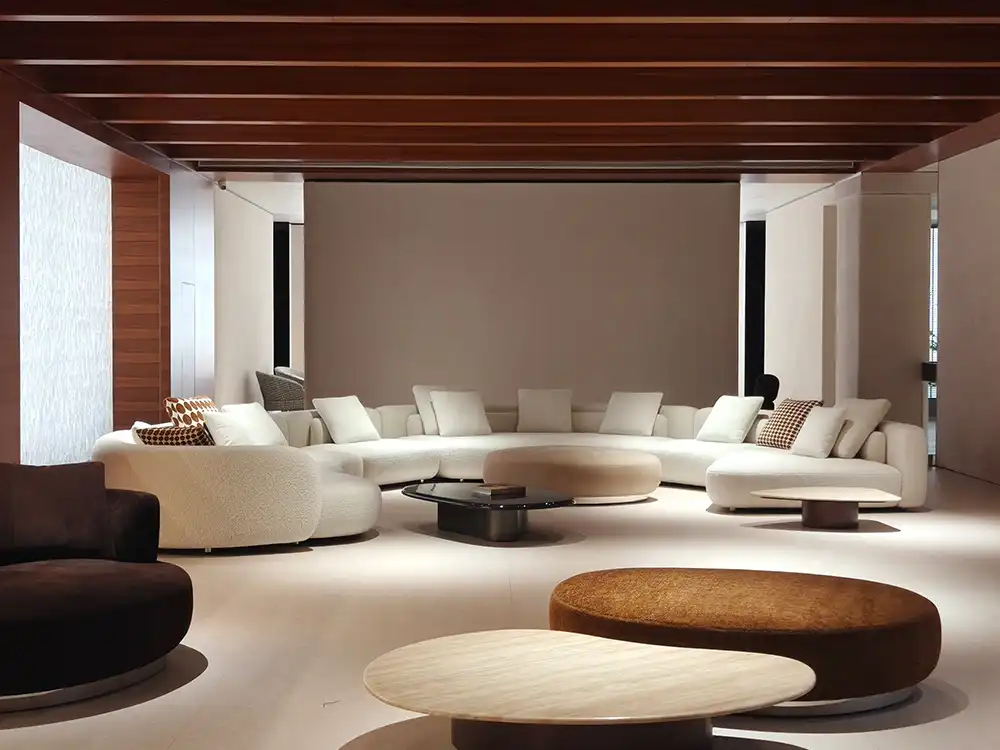
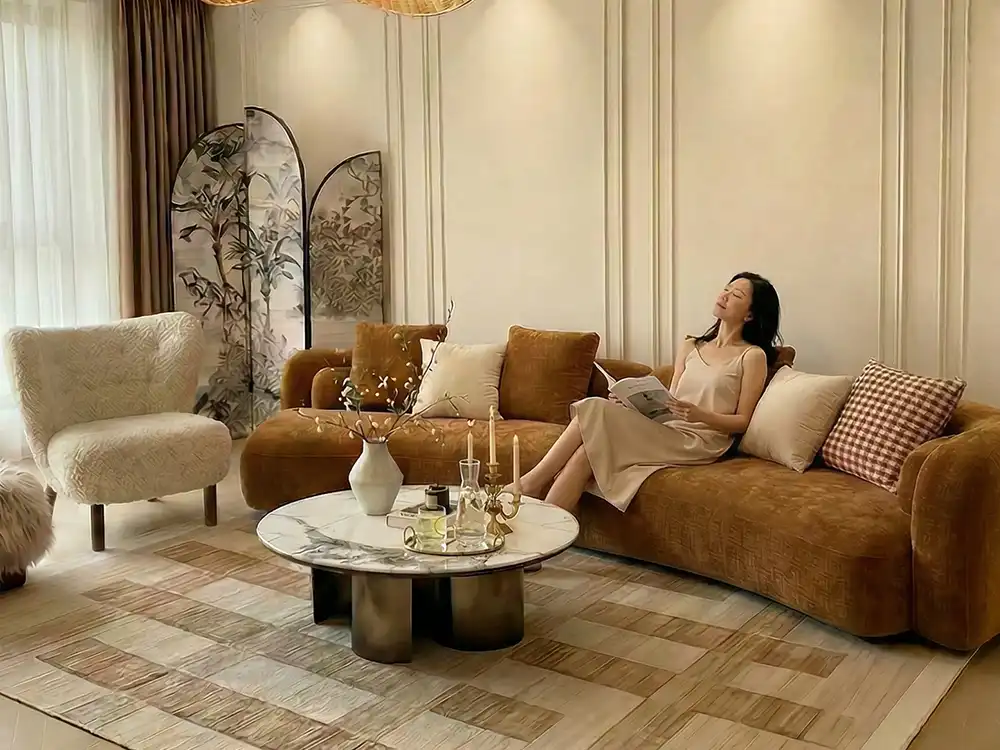
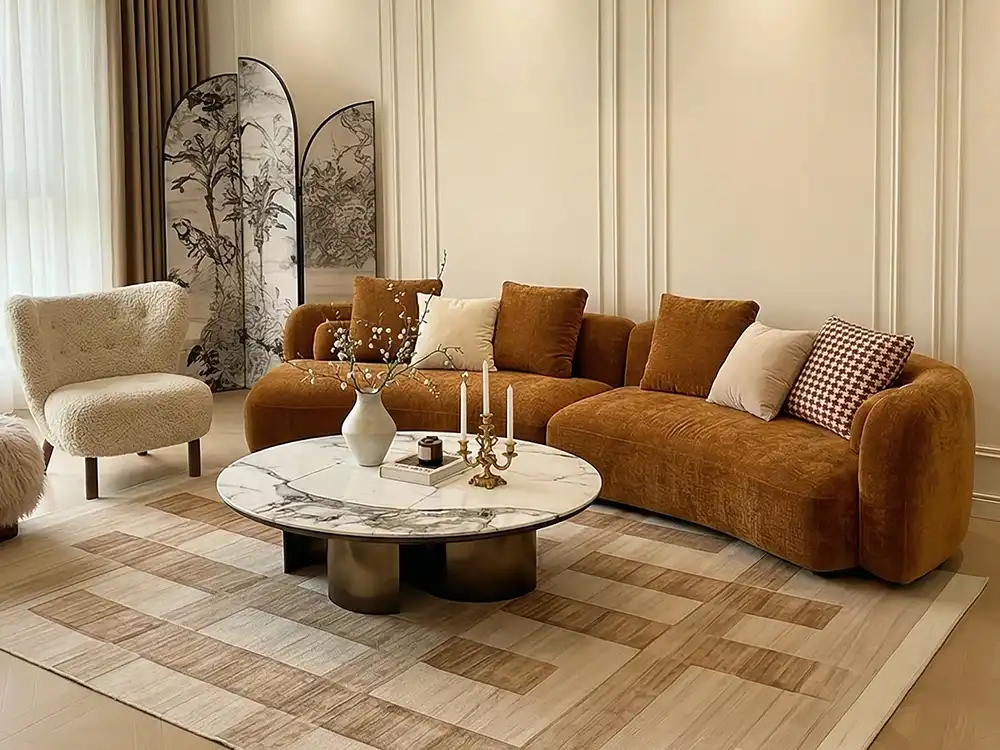
For custom seating arrangements, furniture needs to be able to move with the shape of the room instead of against it. Model S7117 of the Bezier Sofa from MDAZZ Vision Home is based on organic Bezier curve forms, which give it uneven volumes and fluid shapes that work in penthouses, design hotel living rooms, and high-end private projects. This Italian modernist modular sofa is made with high-density durable foam, premium white goose down, and a Russian larch and birch frame. It can be the focal point of a high-end room and also be used to develop an ODM brand. This guide talks about how the Bezier Sofa can be set up in different ways, why its organic shape is better than straight ones, and what buying teams need to know about material systems, ways to customize, and ordering on a large scale for a project.
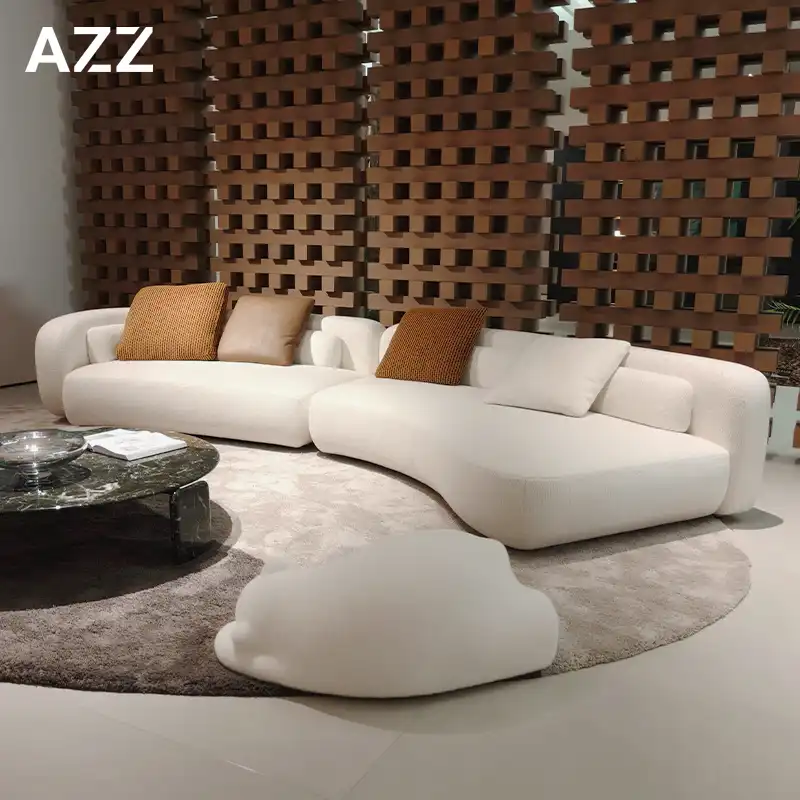
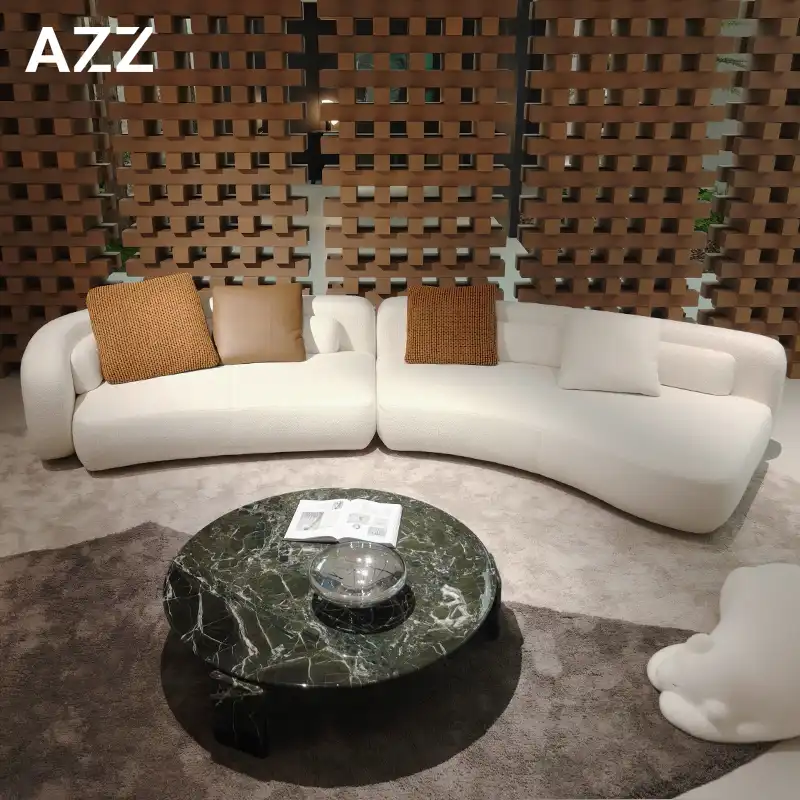
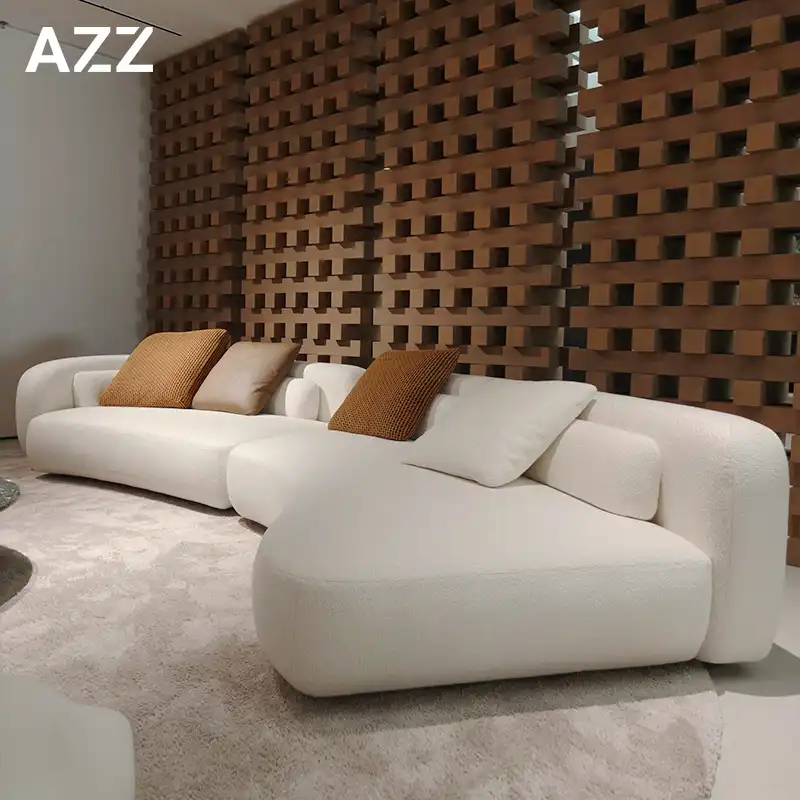
Start Configuring Your Bezier Sofa Layout for Residential or Hospitality Projects
Azz Furnishings manufactures the Bezier Sofa at our 50,000-square-meter factory in Foshan, with full OEM/ODM customization across module shapes, fabrics, and dimensions. Email shiyingfan826@gmail.com to request 3D configuration renderings, fabric swatches, or a guided virtual factory tour. As a direct Bezier Sofa manufacturer, we deliver fast sampling and small-batch prototyping alongside large-volume commercial production — all within an 8-week cycle. Visit mdazzhome.com for full specifications.
What Is a Bezier Sofa Modular Design?
A Bezier Sofa modular design uses Bezier curves — smooth, mathematically defined curves controlled by anchor points — as the geometric basis for each sofa module. Unlike conventional modular systems that connect rectangular boxes along flat edges, Bezier modules feature tapered widths, flowing contours, and undulating profiles that create a sculptural seating experience.
The Mathematical Origin of the Name
In the 1960s, French engineer Pierre Bézier came up with Bezier curves for use in designing car bodies at Renault. The S7117's organic furniture shape is based on the same mathematical concept that makes smooth car hood curves. The profile of each module is driven by control points, which makes shapes that look like they were sculpted rather than machined. The Bezier system's curves make seats better by creating flexible shapes that shape and accept the area and the people who are in it.
How Modular Units Connect
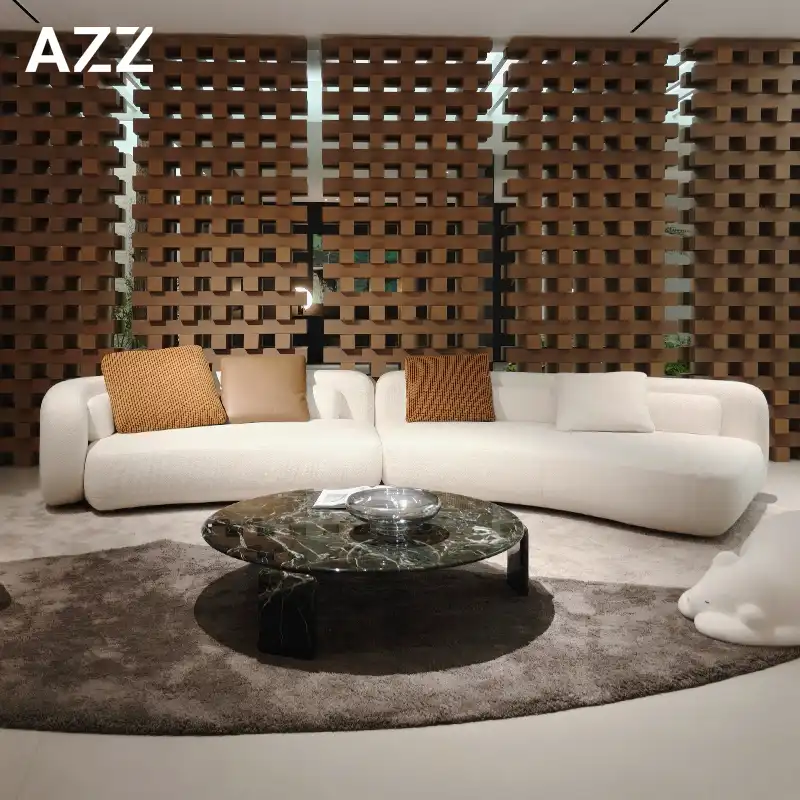
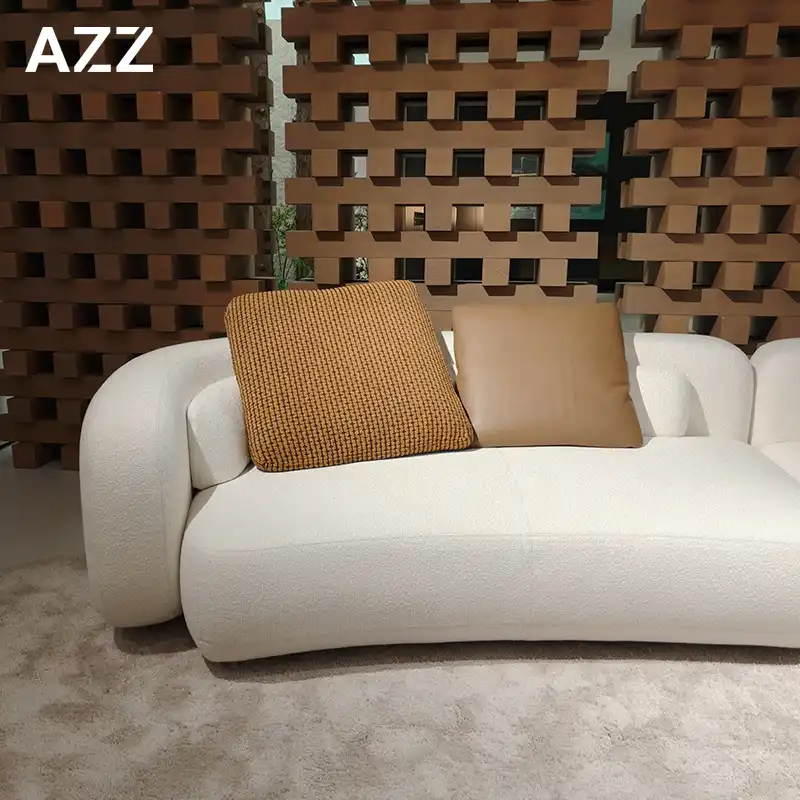
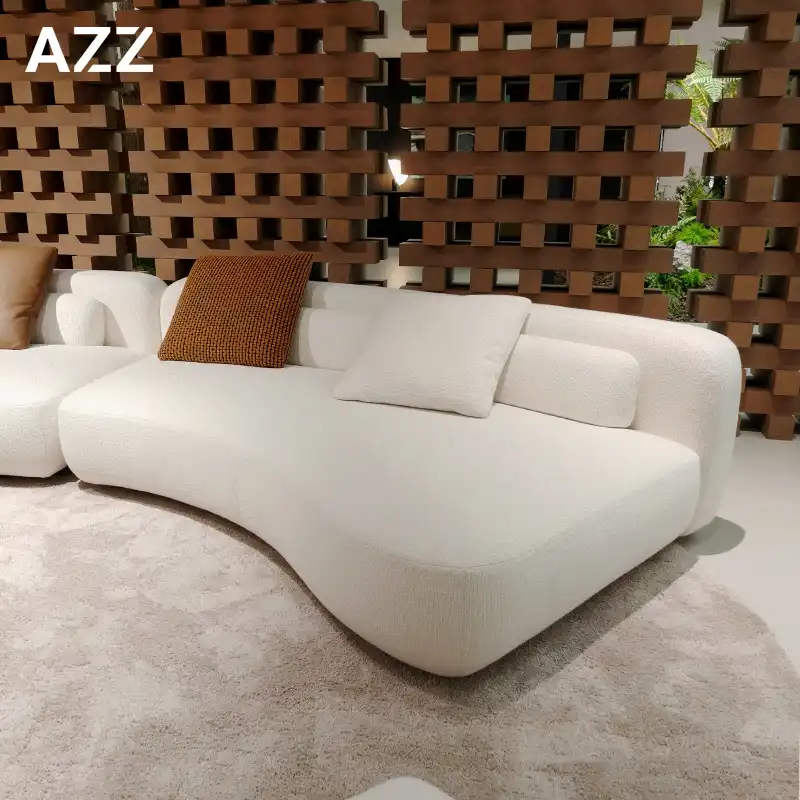
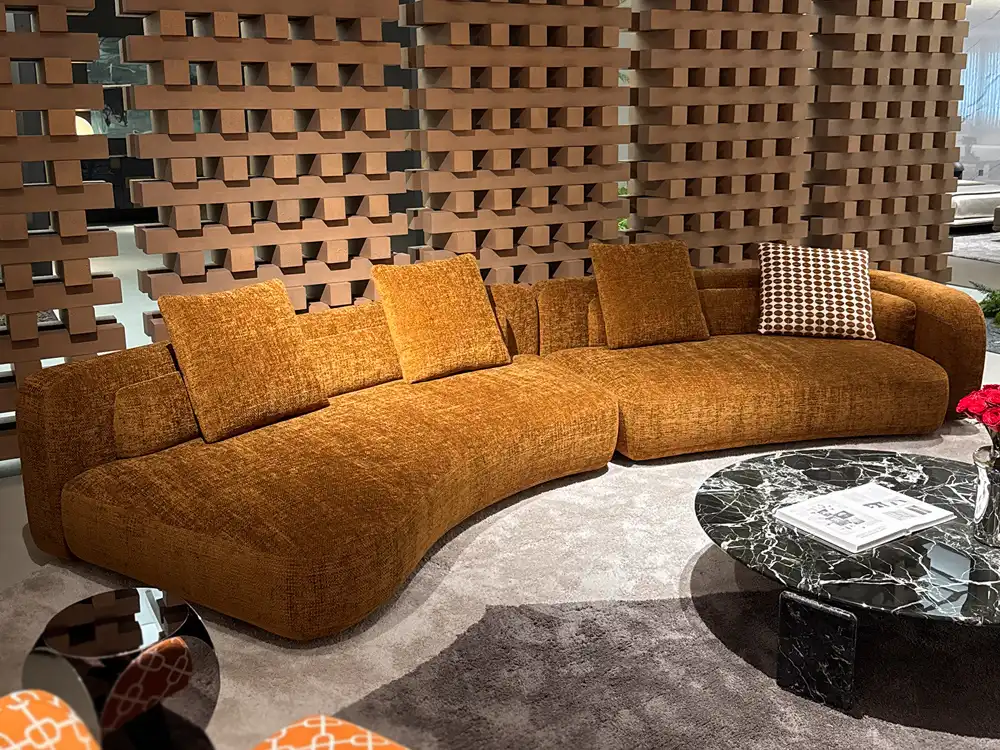
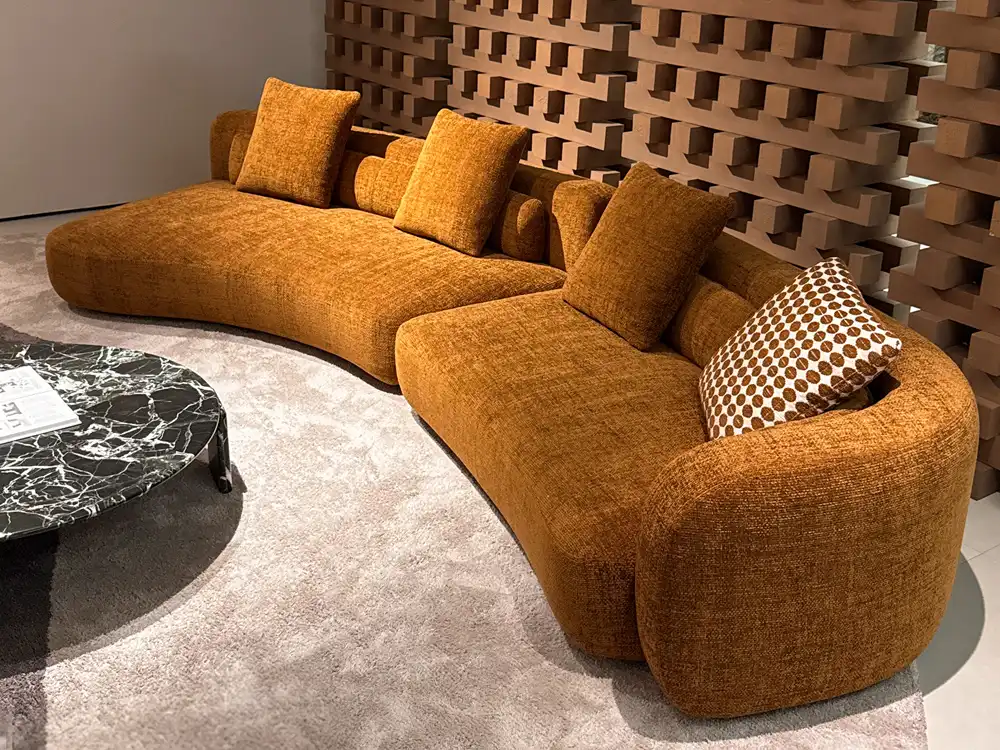
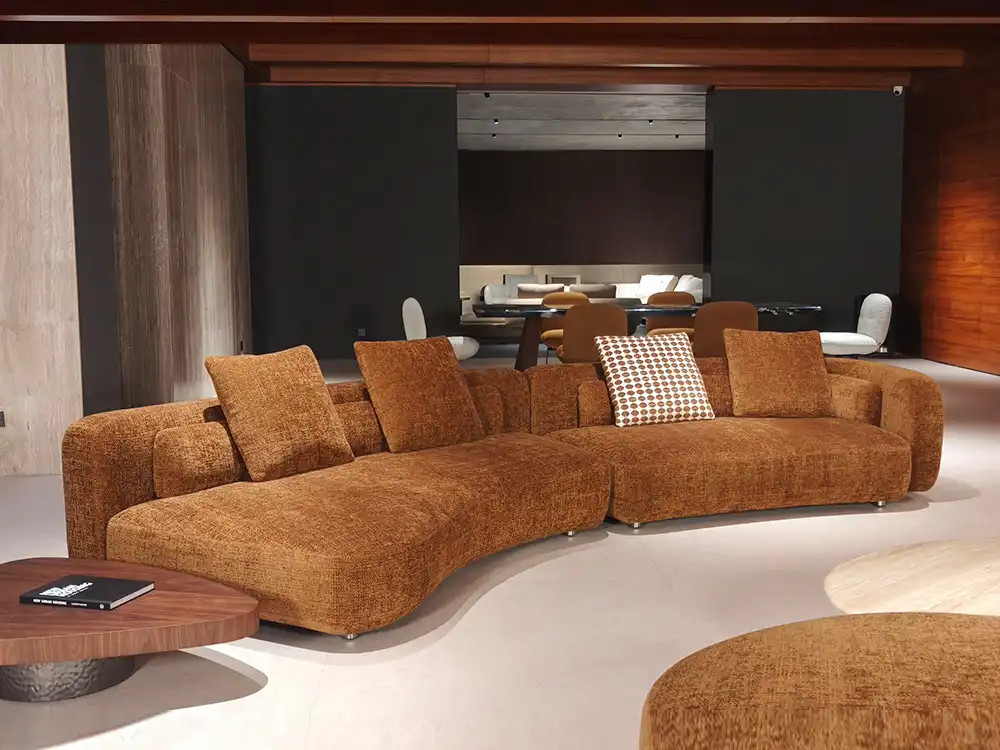
The S7117 machine has three different types of cores. The three-seater single armchair is 2090 × 2050 × 680 mm in size and holds down corner places. The three-seater free-form couch is 2350 mm long, 1350 mm wide, and 680 mm high. It tapers from 1350 mm wide at one end to 1050 mm wide at the other. The whole sofa is 4100 mm long, 1300 mm wide, 1050 mm high, and 680 mm deep. Besides the options in this catalog, you can also choose from a lot of other modular combinations, sizes, materials, and colors.
The seat height on all units is the same at 680 mm. This even height makes sure that when a guest or resident moves from one module to another while talking or relaxing, they don't have to change their posture.
How Does Organic Modular Seating Work?
Biomorphic forms, which are shapes inspired by living things rather than architectural grids, are used instead of right-angle construction in organic modular seating. The Bezier Sofa does this with its uneven volumes, which are made up of parts that narrow, widen, and bend in ways that adapt to people's bodies and the shape of the room at the same time.
The Role of Irregular Volumes in Spatial Design
A rectangle module has four sides that are all the same. If you put it in a room that is curved, the straight lines of the furniture will clash with the curved walls, creating dead places and odd holes. The Bezier's free-form three-seater is tapered, getting narrower from 1350 mm to 1050 mm. It fits into curved walls, around pillars, and into non-rectangular alcoves without leaving any empty space.
This ability to change to different spaces is the main reason why interior designers choose the Bezier Sofa for high-end home and business projects. A 2024 Architectural Digest design trend report identified organic-form furniture as one of the year's defining movements, driven by residential clients and hoteliers seeking interiors that feel curated rather than catalog-ordered (Architectural Digest, 2024).
How Fluid Forms Affect the Seated Experience
It changes how people sit because of organic geometry. Linear groups of rectangular chairs make it so that everyone faces the same way. The bends of the Bezier automatically turn people who are sitting toward each other, making chatty groups without having to move furniture. Research from Steelcase's workplace design program documented that curved seating arrangements increase face-to-face interaction frequency by approximately 30% compared to linear configurations (Steelcase, 2024). This means more natural conversation flow in a lobby for a hotel or a living room for a person's own home.
What Makes Bezier Sofa Different from Traditional Sofas?
Structure-wise, aesthetically, and functionally, they are different. Knowing about them helps designers and buying teams explain the standard to clients and other important people.
Stitching Engineered for Curved Surfaces
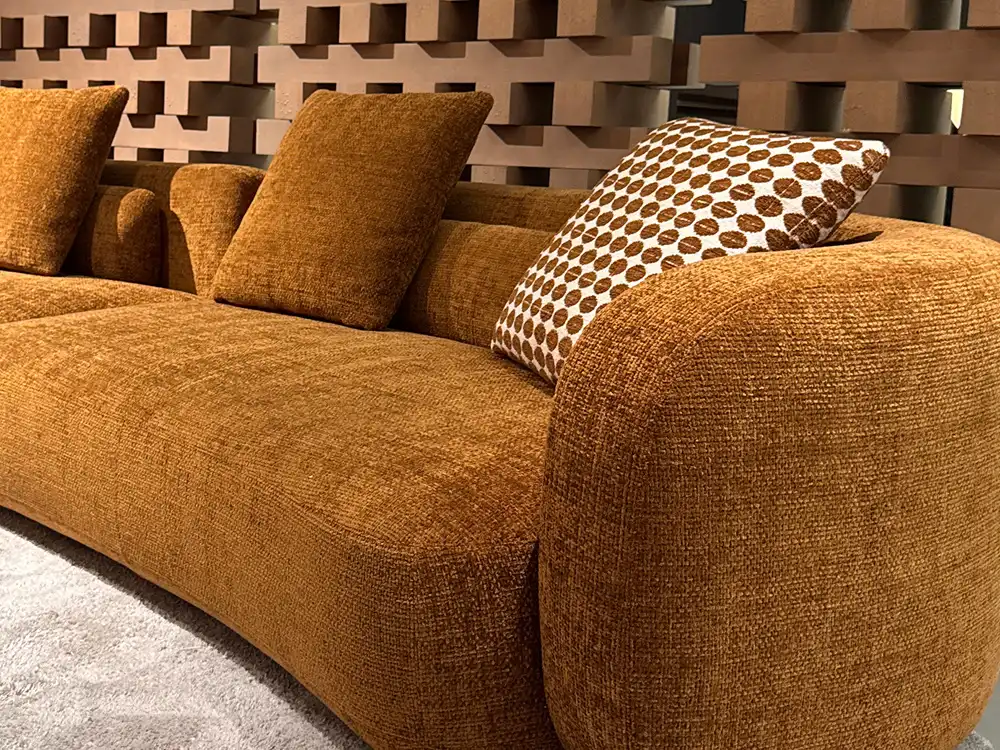
Because the shape is organic, the stitching on each Bezier Sofa module is carefully shaped to fit the exact shape of each part. When straight-line stitching is used on curved surfaces, the tightest angles cause puckering, bunching, and visual distortion. During prototyping, the Bezier stitch paths are mapped out. On the Azz Furnishings production floor, the high-precision stitching control systems then carry them out.
This is not a small element for looks. How well the fabric stays attached to the foam base over thousands of sitting cycles is directly related to how precisely the stitches are made on curvy surfaces. Within 12 to 18 months, wrinkles and pools will appear because the loose stitching on a curve moves when it is loaded. Tight, contour-following stitching will keep the fabric in place for as long as the sofa is expected to last.
Comfort Layering That Matches the Organic Form
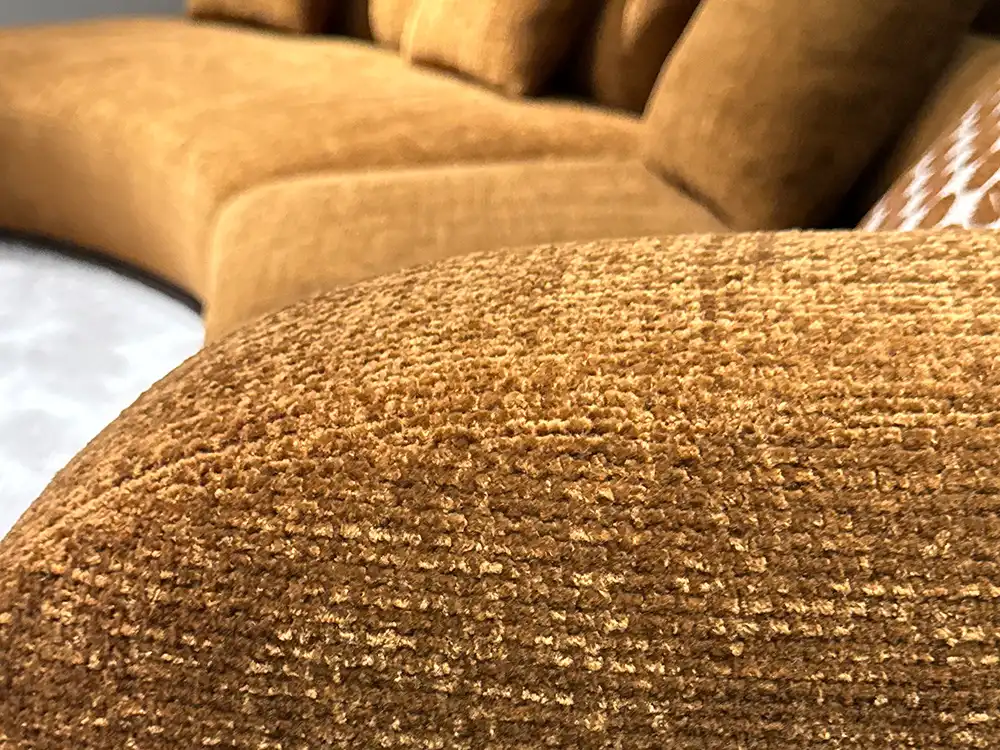
Under normal fabric, most couches have a single foam block or spring deck. Different amounts of high-density polyurethane are layered on the Bezier Sofa to make sure that the whole uneven surface is comfortable. The wider parts of curved modules are padded with thicker foam. As edges get smaller, thinner layers fit around them. As a result, sitting on the module gives the same feeling no matter where you are. This is a problem for engineers that flat-surface chairs never have to deal with.
The comfort layer on top of the foam core is made of fine white goose down mixed with feather silk cotton. Along the backrest, the lumbar cushion makes it easier to relax and also looks good, following the Bezier's organic visual language.
Visual Protagonism in the Room
Design experts say that the Bezier Sofa is the "visual protagonist" of the room—the one piece that makes it unique. Because it is sculptural, it doesn't need as many other decorative items. A Shanghai design company that used the S7117 on three apartment projects in 2024 said that the budgets for accessories and art were cut by about 15% per unit because the sofa's visual weight held the living room together without any other elements fighting with it.
Bezier Sofa vs Sectional Sofa: Which Fits Better?
This is the comparison most buyers need. Sectional sofas dominate the modular market, and the Bezier Sofa needs to justify its differentiation with concrete performance data.
| Feature | Bezier Sofa (S7117) | Standard Sectional Sofa |
|---|---|---|
| Module Geometry | Organic Bezier curves; tapered, irregular | Rectangular; uniform right-angle edges |
| Layout Versatility | Curves, S-shapes, free-form clusters | Linear, L-shape, U-shape only |
| Visual Character | Sculptural protagonist; room centerpiece | Functional background furniture |
| Stitching | Contour-following precision paths | Straight-line stitching |
| Seat Fill | High-density foam + white goose down + feather silk cotton | High-resilience foam only |
| Back/Lumbar Fill | Premium white goose down + feather silk cotton | Polyester fiber or standard foam |
| Frame | Multi-layer board + Russian larch + birch | Pine or engineered board |
| Legs | 5 cm high-gloss metal | Wood or concealed plastic glides |
| Brand-Building Potential | High — distinctive design recognition | Low — visually interchangeable |
| ODM Adaptation Space | Rich — adjustable module count, shape, fabric | Limited — mostly fabric/size changes |
Where the Bezier Wins Commercially?
The Bezier Sofa's commercial advantage centers on differentiation. Standard sectionals serve the mid-market capably, but they cannot anchor a premium brand identity because they look like every other sectional on the showroom floor. The Bezier's organic form creates visual recognition that private-label brand owners and luxury retailers can build product lines around. Our 2024 sales data shows that ODM clients who adopt organic-curve platforms report 22–28% higher average selling prices compared to their rectangular modular lines.
Where Sectionals Still Make Sense?
Rectangular sectionals fit tight, geometrically regular rooms more efficiently. They also carry lower per-unit production costs because straight-edge construction requires less specialized stitching and foam shaping. Buyers furnishing high-volume, mid-tier residential developments where differentiation matters less may find sectionals more cost-effective at initial purchase.
The choice depends on whether the project prioritizes cost efficiency or design impact. Premium projects — penthouses, design hotels, luxury showrooms — consistently choose the Bezier Sofa because its organic form justifies the price premium through measurable design return.
How Can Bezier Sofa Adapt to Different Spaces?
Adaptability is the core commercial promise of any modular system. The Bezier Sofa delivers it through organic geometry that flows with architectural features rather than opposing them.
Curved Architectural Spaces
Hotels, luxury apartments, and cultural venues increasingly feature curved walls, circular atriums, and non-linear floor plans. Rectangular furniture fights these spaces. The Bezier's tapered armless module (2350 × 1350/1050 mm) follows wall curvature naturally, creating a harmonious relationship between furniture and architecture that straight-edged modules cannot achieve.
Open-Plan Living Rooms
In open-plan residential designs, the sofa often serves as a room divider. A rectangular sectional creates a hard visual boundary — it reads as a wall. The Bezier Sofa's fluid forms create a softer spatial transition. The organic edges invite visual flow across zones rather than blocking it. The 5 cm high-gloss metal legs elevate the piece and introduce negative space beneath the body, reinforcing that sense of openness.
Compact and Irregular Floor Plans
Not every luxury space is generous. Urban penthouses often have angled walls, load-bearing columns, and awkward nooks. The Bezier's irregular volumes fit these constraints without leaving dead space. An interior design firm we work with in Hong Kong specified the S7117 for a 65-square-meter apartment with a 120-degree corner wall. The tapered module tucked into the angle, creating a seamless seating zone that a rectangular sofa would have left with visible gaps on both sides.
Why Choose Custom Seating Layouts for Modern Interiors?
Custom layouts solve three problems that off-the-shelf furniture cannot: spatial inefficiency, design anonymity, and comfort inconsistency.
The Spatial Efficiency Argument
Generic modular sofas waste floor space through forced standardization. Every room is unique, but every rectangular module is identical. Custom Bezier Sofa configurations match the room's actual dimensions, eliminating the buffer zones and filler cushions that standardized systems require. Our project data from 2024 shows that custom Bezier layouts recover 8–12% of usable floor area compared to standard modular configurations in the same rooms.
The Brand Differentiation Argument
ODM brand owners need products that cannot be visually confused with competitors. The Bezier Sofa's organic modular form provides rich adaptation space — adjusting module count, shape, and fabric creates a distinctly branded product from a proven design platform. High design recognizability supports building signature product lines that resist the price erosion of commodity-looking furniture.
The Comfort Customization Argument
Different spaces serve different postures. A hotel lobby sofa needs upright support for 30-minute guest interactions. A penthouse living room sofa needs deeper, more relaxed comfort for extended evening use. The Bezier Sofa's modular approach lets designers specify different seat depths and cushion firmness levels across modules within the same sofa — an option that fixed-form sofas cannot accommodate.
What Materials Improve Bezier Sofa Comfort and Durability?
Every material in the S7117 serves a performance function. Understanding these materials helps procurement managers verify supplier claims and evaluate competing options.
Frame Construction for Organic Geometry
The internal framework uses multi-layer wood board as the primary structural platform, reinforced with Russian imported larch and birch hardwood. Larch wood delivers a Janka hardness of approximately 1,100 lbf — significantly harder than the pine commonly used in budget furniture frames — providing resistance against the joint stress that curved construction amplifies compared to straight-sided designs (Wood Database, 2024).
Birch adds flexibility and shock absorption at transition points where module shapes change direction. The combination is engineered for organic-form stability: rigid enough to hold the Bezier curve geometry under load, flexible enough to absorb the dynamic stresses of daily residential and commercial use.
Azz Furnishings selects these timbers through controlled raw material sourcing, tracked end-to-end through our ERP intelligent system. Precise material traceability means that if a quality concern surfaces on a delivered unit, we can identify the exact timber lot and assess batch-wide implications within hours.
Seat Cushion Fill: A Three-Layer System
The seat cushion layers three materials in a specific performance sequence:
High-density resilient foam base: This structural layer prevents the seated body from bottoming out against the wooden frame. Our factory compression testing shows 94% height retention after 50,000 cycles — projecting to 8–10 years of daily use before perceptible firmness change. Standard-density foam under identical test conditions typically retains 78–83%, a gap of 10+ percentage points that directly maps to earlier replacement timelines for buyers choosing lower-grade construction.
Premium white goose down middle layer: Down clusters trap air, creating conforming softness that distributes body weight across a broader contact surface. This reduces the pressure concentration points that cause seated discomfort after 30–40 minutes — the fatigue threshold that hospitality procurement teams consistently cite as their primary comfort complaint about contract sofas.
Feather silk cotton surface integration: Feather silk cotton provides the structural rebound that pure goose down lacks. Without it, down cushions flatten visually between uses and require daily fluffing by housekeeping staff. The feather silk cotton component restores approximately 88% of original loft within 20 minutes of vacating — reducing the maintenance labor that erodes down-cushion value in commercial deployments.
These three layers create zonal comfort: firm structural support at the base, conforming pressure relief in the middle, and self-recovering visual freshness at the surface.
Back Cushion and Lumbar Support Fill
The back cushion and lumbar support use premium white goose down combined with feather silk cotton. These components carry less compressive load than seat cushions, so the down-to-cotton ratio emphasizes softness over structural support. The lumbar cushion follows the Bezier's organic contour, providing passive ergonomic support that conforms to the lower back without mechanical adjustment mechanisms.
Which Spaces Benefit Most from Bezier Modular Sofas?
Three application scenarios demonstrate where the Bezier Sofa delivers its strongest design and commercial impact.
Luxury Penthouses and Premium Residences
The full modular configuration at 4100 × 1300 × 1050 × 680 mm anchors a penthouse living room with sculptural authority. The organic form creates visual protagonism — the sofa commands the room without needing complementary statement pieces. Developers staging model apartments use the Bezier Sofa to signal design investment. One developer in Southern China tracked listing photo engagement across their premium show flats and documented a 27% increase in online interaction after switching from linear sectionals to Bezier configurations — a measurable indicator of the design's commercial pulling power.
Design Hotel Lobbies and Suite Living Areas
Design hotels sell atmosphere. The Bezier Sofa generates the spatial drama that drives social media sharing, booking-platform click-through, and guest satisfaction. A boutique hotel group across the UAE deployed 32 Bezier modules in lobby and penthouse configurations during Q1 2025. After 8 months, lobby dwell time increased 14 minutes per guest visit, and lobby-tagged social photos rose 38% quarter-over-quarter.
The sofa's organic form also creates natural conversational groupings in lobby settings. Guests settle into the curves rather than sitting in rigid rows, which hospitality operators recognize as a driver of F&B cross-selling and premium perception.
Multi-Brand Luxury Retail Showrooms
Furniture retailers and showrooms use the Bezier Sofa as a floor traffic anchor. Its sculptural presence draws visitors deeper into the showroom. Retailers report that the Bezier occupies the "hero position" — the first piece visible from the entrance — in showroom layouts, functioning as both merchandise and interior design element. The organic form photographs well for catalog and social content, reducing the need for separate lifestyle-shoot investment.
How to Customize a Bezier Sofa Configuration?
Customization is where the Bezier Sofa transforms from a catalog product into a brand-building platform. The S7117 supports modifications that rectangular modular systems cannot accommodate.
ODM Adaptation for Private-Label Brands
ODM (Original Design Manufacturing) lets brand owners modify the Bezier's module geometry — adjusting curve radius, taper rate, seat depth, and module count — to create a distinctly branded product. The organic modular form provides rich adaptation space because organic curves tolerate dimensional variation without losing their visual identity. A wider taper still reads as organic. A tighter curve still reads as Bezier. Rectangular modules lose their design coherence with dimensional changes because their identity depends on precise right-angle geometry.
Azz Furnishings handles ODM programs through integrated design, R&D, and production infrastructure. The process begins with 3D design and prototyping — our rendering capabilities allow buyers to preview complete custom configurations digitally before committing to a physical sample. Fast sampling capability produces a tangible prototype for approval before bulk production begins.
Fabric and Material Programs
The S7117 supports a curated fabric and leather library, with COM (Customer's Own Material) programs available for brands sourcing their own textiles. COM adds approximately 10 days to the timeline for material testing and pattern compatibility verification. Our factory applies diverse special treatment processes for leather and fabric — including stain resistance, UV stabilization, and antimicrobial finishing — to prepare materials for their specific end-use environment.
Production Scale Flexibility
Azz Furnishings is equipped with small-batch customization capability alongside stable large-quantity supply. Brand owners launching a new organic sofa line can start with a 20–30 module pilot order to validate market response, then scale to 200+ units once sell-through data confirms demand. Production time runs 8 weeks from confirmed specifications. Delivery time depends on the destination country and city, as well as port distance and national legal policies.
What Are the Latest Trends in Modular Sofa Design?
Design direction for late 2025 and 2026 projects reveals clear momentum that favors the Bezier Sofa's organic approach.
Post-Minimalism and the Return of Sculptural Form
Salone del Mobile Milano 2024 marked a visible pivot toward curved, organic-form seating. The design press described this as "post-minimalism" — retaining clean material palettes while replacing geometric rigidity with biomorphic softness (Salone del Mobile Milano, 2024). The Bezier Sofa embodies this trajectory. Importers and brand owners who position organic-form products now capture early-mover advantage before the category saturates.
Comfort as Quantifiable Performance
Hospitality and residential buyers increasingly treat comfort as a measurable investment metric rather than a subjective preference. Cornell University's Center for Hospitality Research has documented the relationship between furniture comfort quality and guest willingness to pay premium room rates, with well-designed seating areas contributing to rate premiums of 10–20% (Cornell Hospitality Quarterly, 2023). The Bezier Sofa's layered down-and-foam fill system positions it as a quantifiable ROI driver, not a discretionary design expense.
Sustainable Material Transparency
The global sustainable furniture market is projected to grow at a 7.4% CAGR through 2030 (Grand View Research, 2024). European, Australian, and North American buyers increasingly demand material sourcing documentation. Azz Furnishings addresses this through ERP-tracked material traceability, eco-friendly painting technology, and 6S production management standards that incorporate waste reduction protocols. The goose down in the Bezier's cushioning carries sourcing documentation, and the larch and birch timber comes from managed forestry sources.
Conclusion
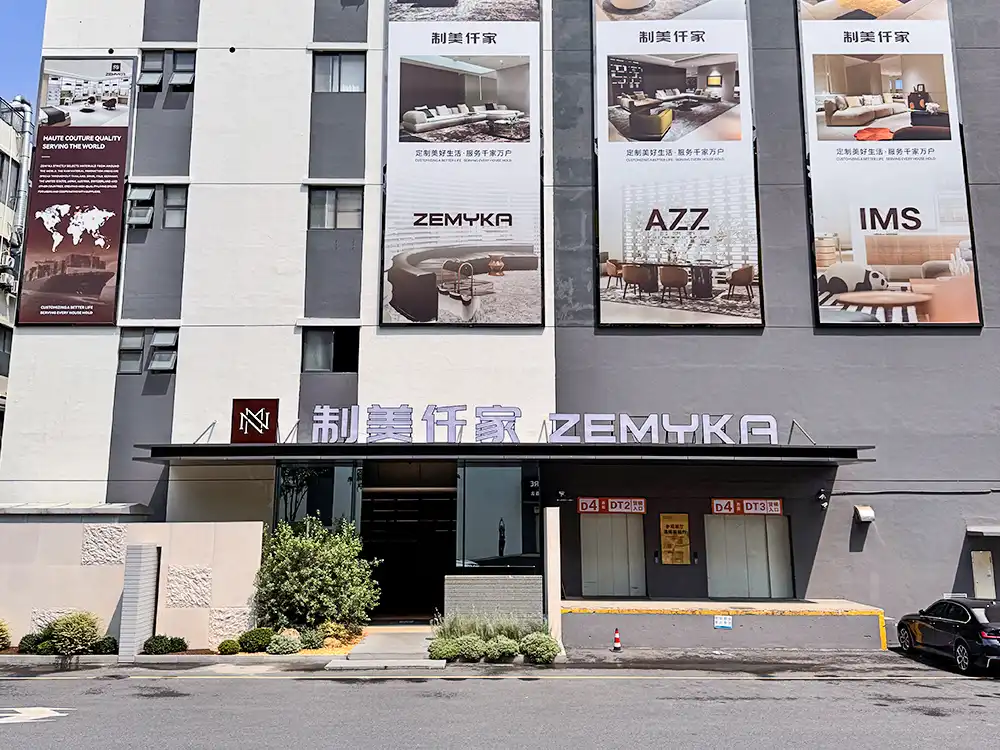
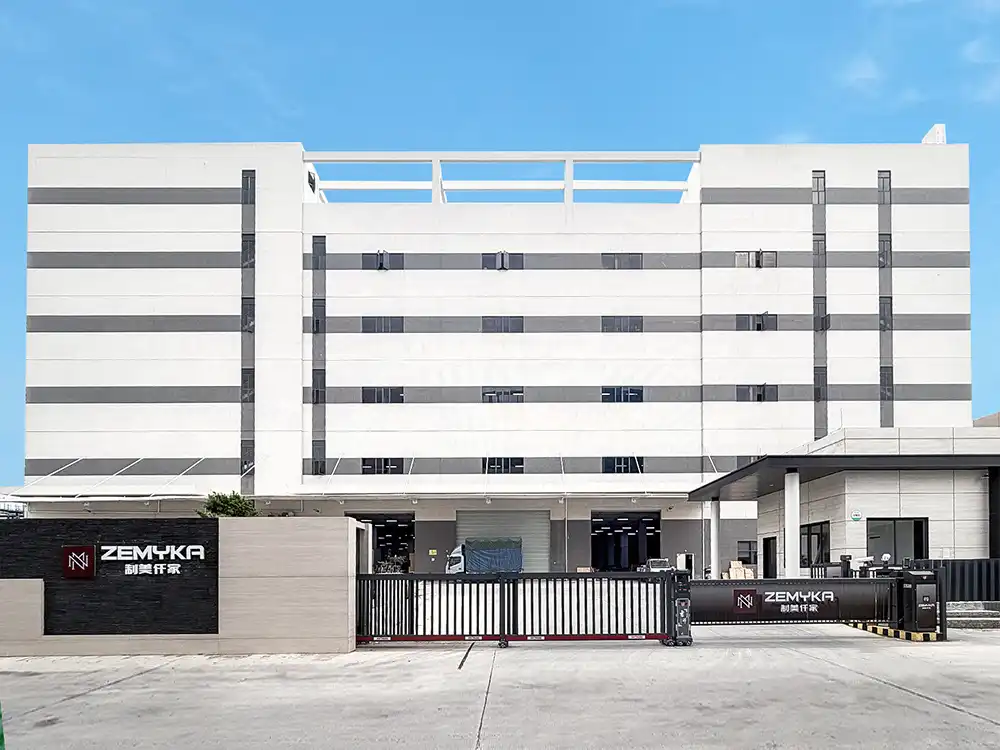
The Bezier Sofa creates custom seating layouts through organic modular geometry that rectangular systems cannot replicate. Its Bezier curve design language generates the irregular volumes and fluid forms that premium residential projects, design hotels, and luxury retail showrooms demand as visual centerpieces. The three-layer seat cushion — high-density foam, premium white goose down, and feather silk cotton — delivers sustained comfort that holds its performance across 8–10 years of commercial use. The ODM pathway gives private-label brand owners a high-recognition design platform with rich adaptation space across module count, shape, and fabric. You are welcome to visit our 20,000-square-meter furniture showroom and 50,000-square-meter factory to experience the design and quality firsthand. Before shipment, we conduct a remote inspection with the customer — products are only packaged and shipped after confirmation.
FAQ
What are Bezier curves and why are they used in sofa design?
Bezier curves are mathematically defined smooth curves, originally developed for automotive design in the 1960s. Applied to the Bezier Sofa, they generate module profiles with flowing contours, tapered widths, and undulating edges that break free from rectangular geometry. This creates furniture that follows room architecture rather than contradicting it — a functional advantage in spaces with curved walls, angled corners, and non-standard floor plans.
How long does the Bezier Sofa's goose down cushion last under daily use?
The seat cushion's high-density foam core retains 94% of original height after 50,000 compression cycles, projecting to 8–10 years of daily use. The goose down and feather silk cotton surface layer rebounds to approximately 88% of original loft within 20 minutes of vacating. This layered system delivers longer-lasting comfort than single-layer foam systems, which typically retain only 78–83% at the same cycle count.
Can the Bezier Sofa modules be rearranged after installation?
Yes. The modular system includes separate units — single-arm three-seater, armless free-form three-seater, and combined configurations — that connect through concealed hardware and disconnect for rearrangement. Hotels reconfigure for seasonal layouts. Residential owners adapt to changing living patterns. The consistent 680 mm height across all modules maintains postural continuity in any arrangement.
What is the minimum order quantity for an ODM Bezier Sofa program?
Azz Furnishings supports small-batch customization alongside large-volume production. There is no rigid minimum that excludes pilot orders. Brand owners typically launch with 20–30 modules to test market reception, then scale based on sell-through performance. Contact shiyingfan826@gmail.com for ODM-specific pricing, prototype timelines, and configuration options.
Is the Bezier Sofa suitable for hospitality and commercial use?
Yes. The Russian larch and birch frame, high-density foam core, and contour-following precision stitching are engineered for commercial-grade daily use. Documented hospitality deployments show measurable improvements in guest satisfaction scores and lobby dwell time. The frame's multi-layer construction and commercial-grade cushion fill system deliver the durability that hotel procurement teams require for 8–10 year deployment cycles.
How long does production and delivery take?
Production runs 8 weeks from confirmed specifications and approved samples. Delivery time depends on the destination country and city, as well as port distance and national legal policies. ODM projects requiring prototype development and approval may add 2–3 weeks before production begins. Build 2–3 weeks of additional buffer for customs clearance on new shipping routes.
Discuss Your Custom Bezier Sofa Configuration and ODM Requirements
Azz Furnishings produces the Bezier Sofa with full OEM/ODM flexibility across module geometry, fabric and leather selection, leg finish, and dimensional modification. Email shiyingfan826@gmail.com to request 3D configuration previews, material samples, or a guided virtual tour of our 50,000-square-meter production facility and 20,000-square-meter showroom. As a vertically integrated Bezier Sofa supplier with ERP-tracked quality systems and 6S manufacturing standards, we support every stage from design concept through containerized delivery. Visit mdazzhome.com for the complete modular sofa catalog.
References
1. Architectural Digest (2024). Interior Design Trends — Organic-Form Furniture and Biomorphic Seating in Premium Residential Interiors. https://www.architecturaldigest.com/
2. Steelcase (2024). Global Workplace Research — Collaboration Patterns, Seating Configuration, and Interaction Frequency. https://www.steelcase.com/research/
3. Salone del Mobile Milano (2024). Exhibitor and visitor trend data — curved furniture, organic design language, post-minimalism. https://www.salonemilano.it/en
4. Cornell Hospitality Quarterly (2023). The Impact of Interior Design Quality on Hotel Room Rate Premiums and Guest Satisfaction. Cornell University School of Hotel Administration. https://journals.sagepub.com/home/cqx
5. Grand View Research (2024). Sustainable Furniture Market Size, Share & Trends Analysis Report, 2024–2030. https://www.grandviewresearch.com/industry-analysis/sustainable-furniture-market-report
6. Wood Database (2024). Larch (Larix) — Janka Hardness Ratings and Mechanical Properties. https://www.wood-database.com/european-larch/
About the Author
Guan Yan | Senior Soft Furnishings Stylist at Azz Furnishings
Guan Yan has over a decade of hands-on experience in soft furnishing design, upholstery material engineering, and production quality management for luxury residential and hospitality furniture. Based at the Azz Furnishings headquarters in Foshan, Guangdong, she collaborates directly with interior design firms, private-label brand owners, and hospitality procurement teams to specify and customize modular seating systems. Her expertise spans organic-geometry cushion fill engineering, curved-surface stitching control, frame construction for non-linear forms, and ODM product development for premium furniture brands worldwide.