




How to Choose the Best Lounge Chair for Comfort and Style?
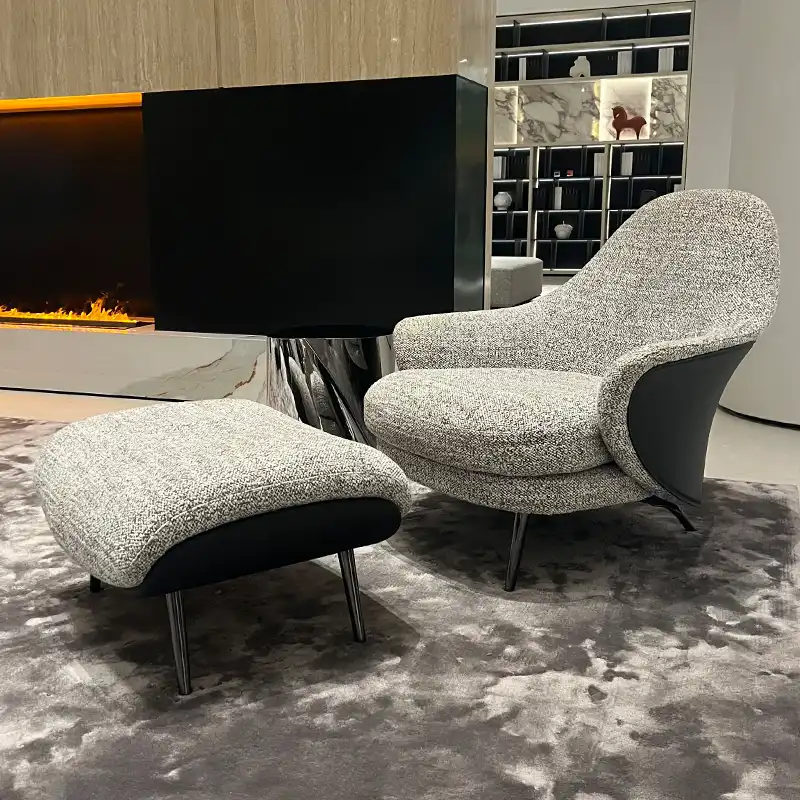
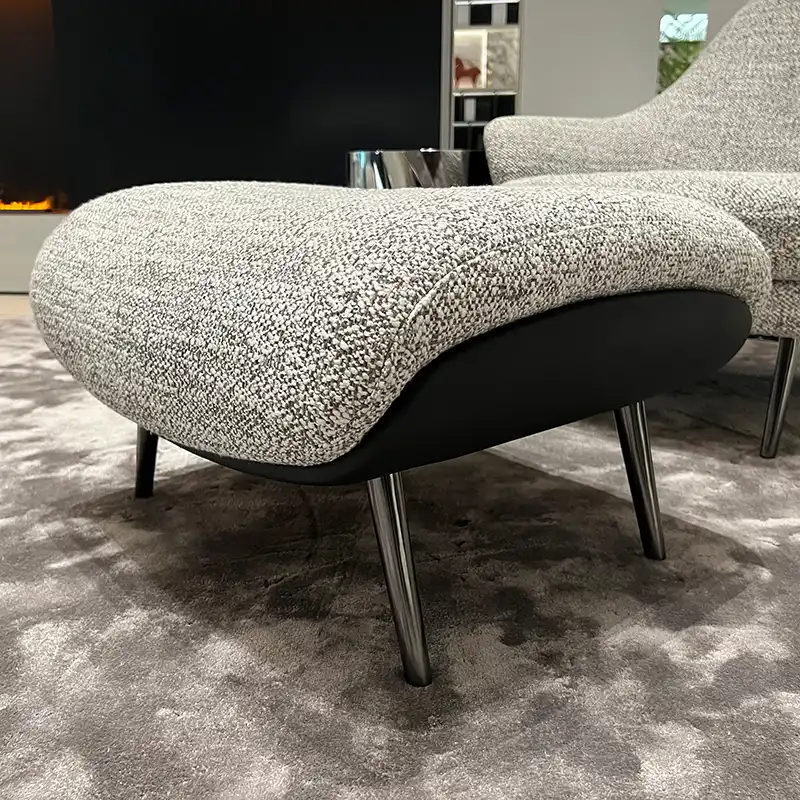
Finding the right lounge chair requires finding a mix between how well it works for your body and how it looks. More and more, commercial buyers are choosing high-end choices like the Angie lounge chair, which has a flexible seat size of 850 x 950 x 840 mm and can be upholstered in cotton, linen, or leather. This guide walks buying professionals through important factors, such as ergonomic requirements and source dependability, to make sure that your investment lasts in places like hotels, executive offices, and design-forward stores. When you understand these basics, choosing a chair goes from being a guess to a strategic benefit.
Understanding Your Lounge Chair Needs: Defining Comfort and Style Criteria
Why Ergonomics Matter in Commercial Seating?
In work settings, ergonomic design has a direct effect on how happy and productive users are. Supportive chairs for the spine keep you from getting tired during long meetings or wait times. When choosing furniture for places like hotel lobbies or business areas where people spend a lot of time sitting, lumbar support, seat depth, and cushioning density become very important.
Well-designed lounge chairs use variable-density foam that molds to the shape of your body without weakening the structure. The backrests of high-end models are carefully shaped and set at about 105-degree angles to support good posture while keeping you relaxed. This level of technical detail sets professional-grade furniture apart from home-style options.
The Angie lounge chair meets these needs with its high-quality fabric choices and frame that is designed to be comfortable for all body types. Procurement teams say that guest feedback scores got better after they switched out regular chairs for ones that are better for your body. When looking at comfort features, chairs with movable parts or hardness levels should be at the top of your list so that you can meet the needs of all of your clients.
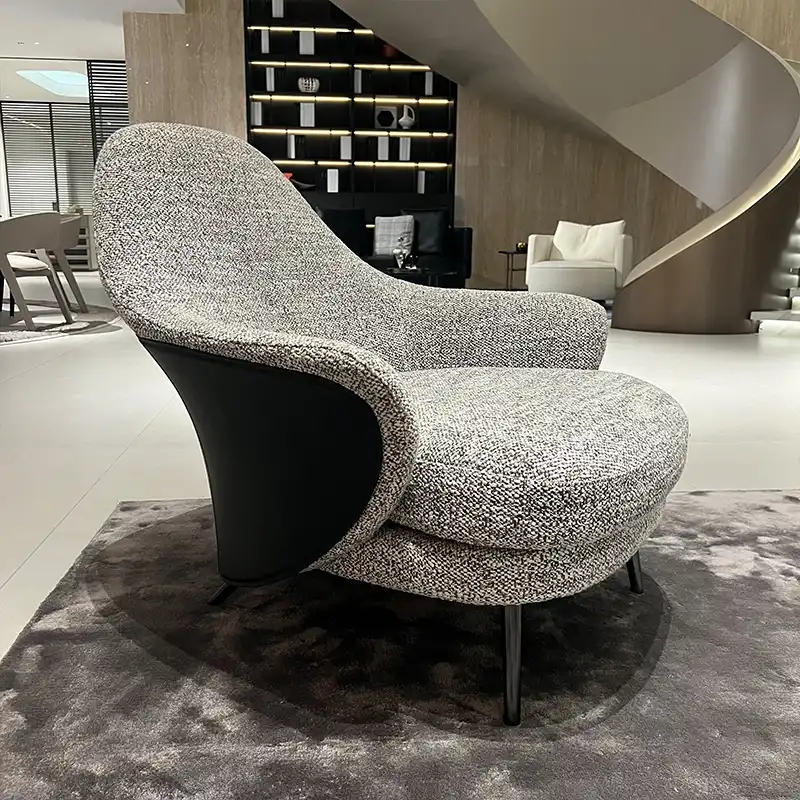
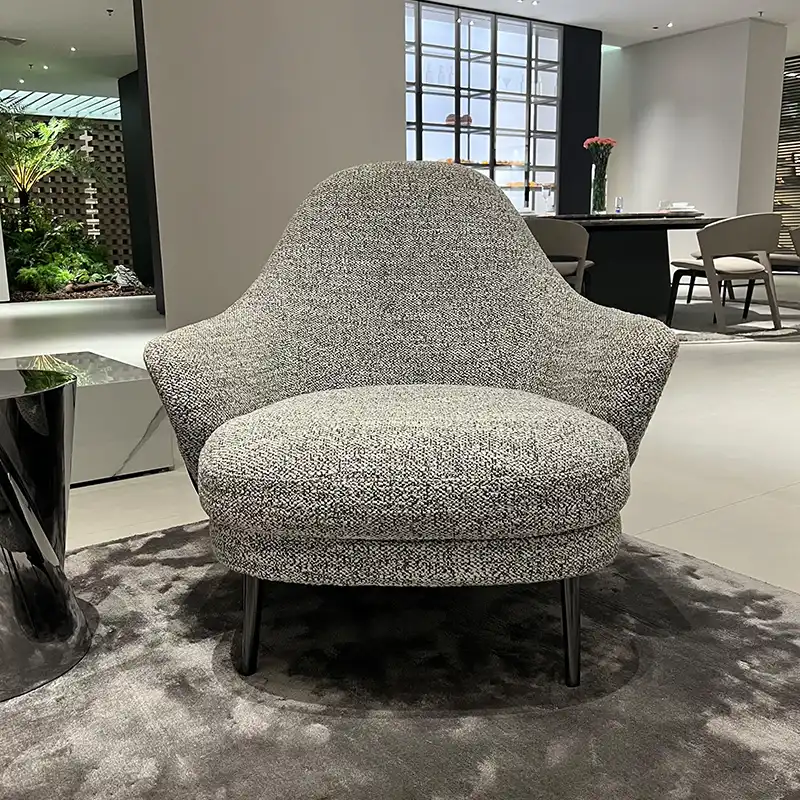
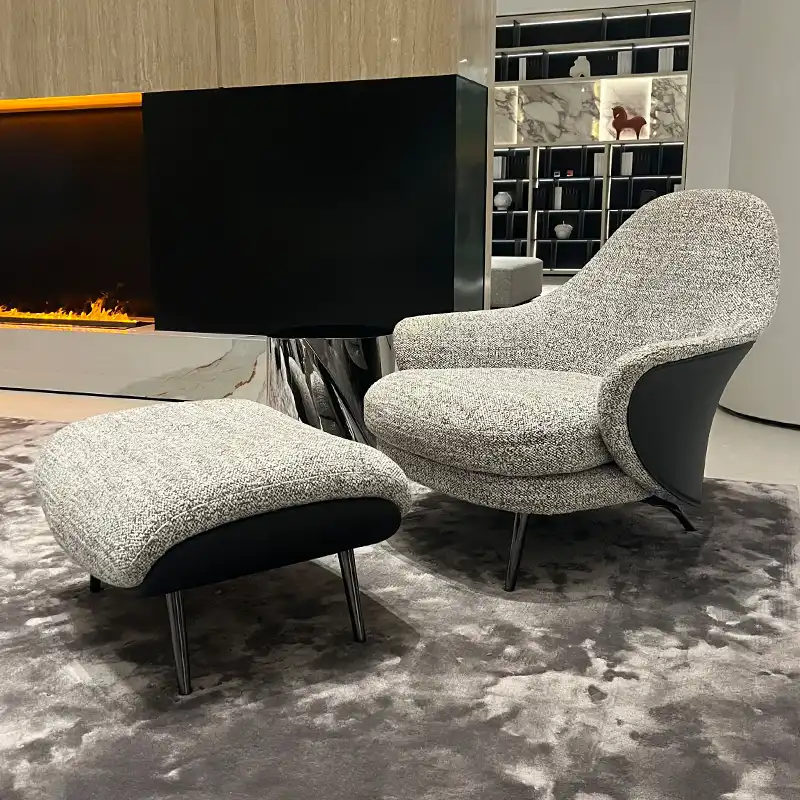
Aligning Aesthetic Design with Brand Identity
Visual consistency between furniture and interior design makes it easier for customers to recognize and understand a brand. Because they are focal points in greeting areas, executive rooms, and hospitality areas, lounge chairs have a big effect on the way the space is designed. Style is more than just how things look on the surface. It also involves things like symmetry, color psychology, and the unity of materials.
Clean lines and flexible profiles that go well with both modern and traditional settings are becoming more and more popular in modern business designs. Chairs with upholstery that can be changed let designers fit current color schemes and keep furniture that looks the same in different places. This adaptability is especially helpful for hotel chains and business sites that need standard but flexible furniture options.
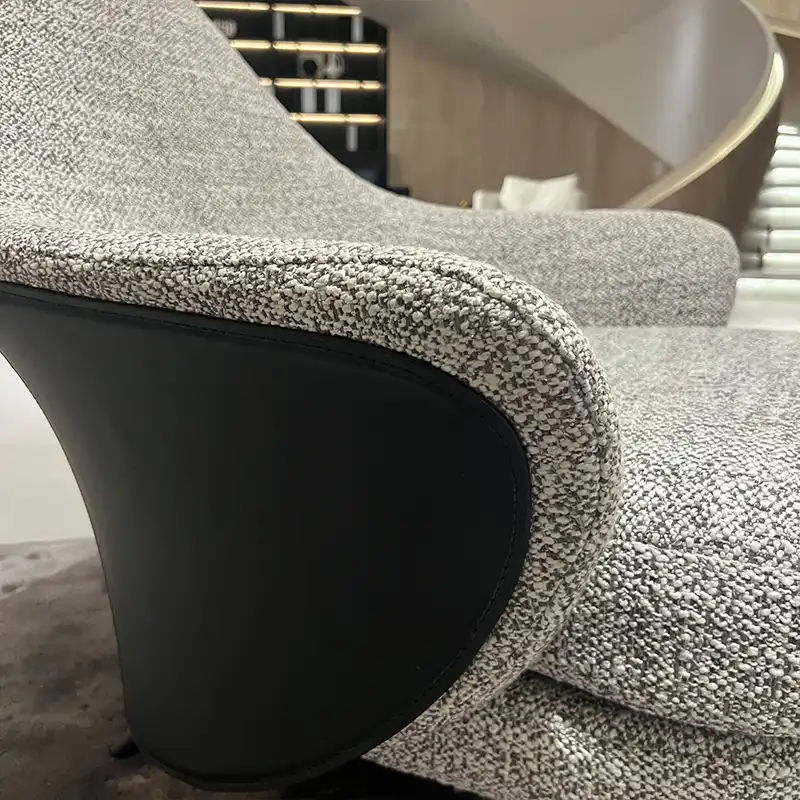
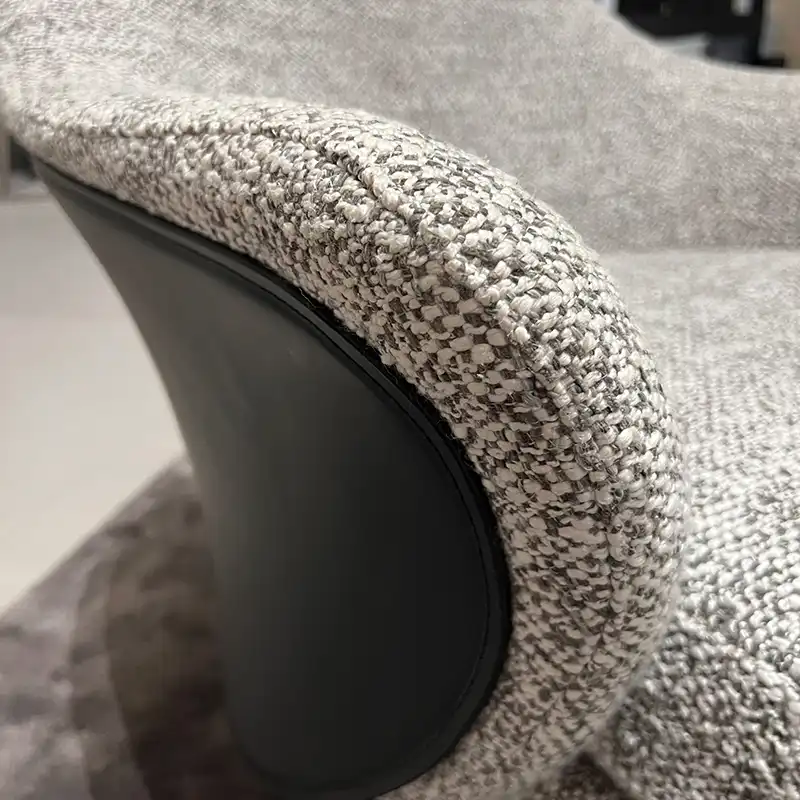
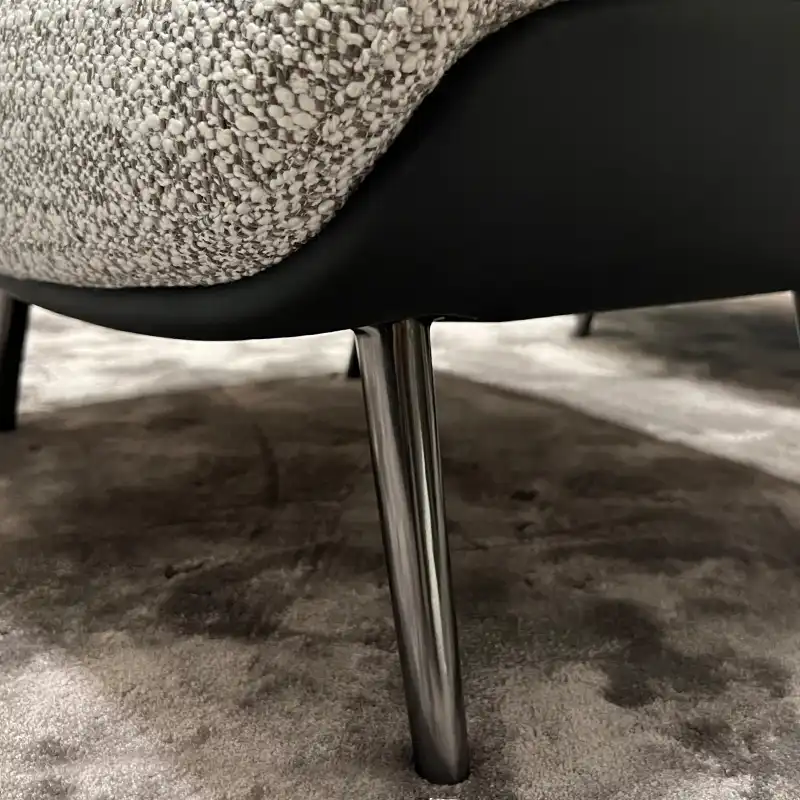
Multi-material choices let you strategically apply in a range of settings. Cotton blends work well in public areas that get a lot of use and need to be cleaned often, while leather furniture adds a touch of class to executive rooms. Because finishes, leg styles, and accent details can be changed, each installation supports established design storylines instead of breaking them.
Balancing Function with Visual Appeal
Commercial furniture that works well strikes a balance between meeting operating needs and being aesthetically pleasing. Every day, chairs have to be able to handle a lot of use while still looking good after a long time. This balance is especially important in hotel settings, where first views have a direct effect on how satisfied guests are.
With commercial-grade materials and reinforced frames, the furniture is built to last without losing comfort. International safety guidelines for fire-resistant materials protect capital and make sure that rules are followed in all areas. End users often can't see these technical details, but they are a big part of figuring out the total cost of ownership.
Choosing furniture that is both useful and nice to look at shows that a group cares about quality. When buying teams look at their choices, they make better decisions when they look at how chairs perform across a number of factors, such as ergonomics, sturdiness, upkeep needs, and visual effect. This all-around method keeps the brand's look consistent across all customer interactions and avoids expensive replacements.
Key Features and Specifications to Evaluate Before Purchasing
Critical Dimensions and Space Planning
The success of incorporating lounge chairs into current floor plans depends on accurate measurements. Standard business seating is usually between 850 and 950 mm wide, which means it's comfy for one person to use without taking up too much space. Specifications for depth affect how people move around, especially in hallways and greeting areas with a lot of foot traffic.
Before agreeing to large orders, procurement teams should ask for specific dimensional models that show the total size, armrest heights, and seat depths. These requirements allow for accurate modeling of space and keep expensive installation shocks at bay. Chairs whose sizes can be changed are useful for projects that have to deal with unique building restrictions or specific mobility needs.
Clearance rules cover more than just the chair itself; they also cover the space around it. For ADA compliance and easy movement, industry guidelines say that paths should be at least 900 mm wide. By adding up the total space effect (chair footprint plus necessary clearances), you can be sure that furniture improves usable plans instead of making them less useful.
Material Quality and Performance Standards
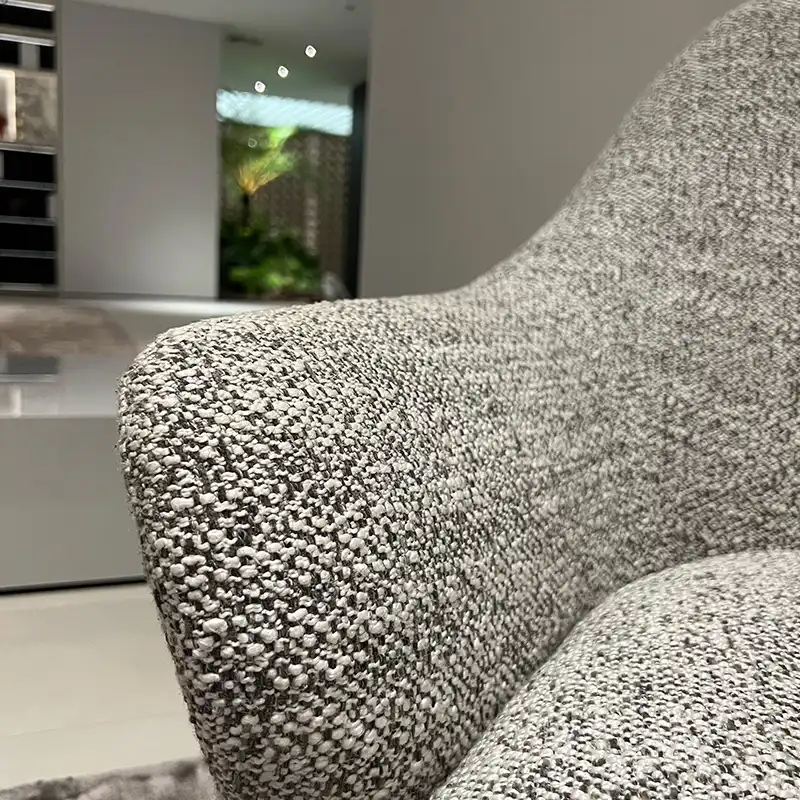
The longevity, upkeep costs, and comfort of the user are all directly affected by the quality of the furniture materials. Commercial-grade materials should be able to handle more than 30,000 Martindale cycles of heavy use in business and leisure settings. To keep leather from breaking, shrinking, and getting damaged by water over time, it needs to be tanned and finished correctly.
Frame design decides how long a structure will last and how much weight it can hold. Heavy use is common in business settings, so metal frames with strengthened joints can handle it. In climate-controlled spaces, wood frames that have been treated with finishes that don't absorb water don't bend. Knowing what the frame is made of helps people who buy things decide if the chairs meet the practical needs of their buildings.
Checking the certifications of materials makes sure that safety and environmental rules are followed. Most places have rules that fabrics that meet BS 5852 Crib 5 fire protection standards are safe for public areas. Eco-friendly finishing methods are in line with companies' efforts to be more environmentally friendly while still meeting performance standards. These technical details set professional-grade furniture apart from options sold in stores for regular people.
Maintenance Requirements and Care Protocols
Long-term worth rests a lot on how easy it is to clean and maintain. When chairs are used in businesses, they need simple care instructions that can be followed by grounds teams without any special training or tools. Removable seat covers make it easy to do deep cleanings on a regular basis, which extends the look of the furniture between replacement rounds.
Leather furniture needs special care, like preparing it regularly and cleaning up spills right away. Different types of fabrics are stain- and dirt-resistant in different ways. Some can be cleaned with regular household cleaners, while others need to be treated by a professional. Making these needs clearer during buying stops maintenance costs from coming up out of the blue.
When you buy in bulk, you should get full care directions that include how often to clean, what products are safe to use, and how to deal with common problems. Suppliers who offer continued assistance through tools for troubleshooting or maintenance training add measured value after the product is delivered. From this operational point of view, choosing furniture goes from being a one-time buy to a long-term relationship.
Procurement Considerations for B2B Buyers: Streamlining Your Purchase Process
Identifying Reliable Suppliers and Manufacturers
Credibility of the supplier of the lounge chair is the key to successfully buying a lot of furniture. Larger companies with specialized production centers for the lounge chair can provide consistency, quality control, and a stable supply chain that smaller companies can't. Facilities that cover more than 50,000 square meters for the lounge chair show that they have enough production space to handle large business orders without affecting delivery times.
To judge a company's ability to make things, you have to look at its quality control methods, production standards, and safety certifications. When factories use 6S management concepts, they show organized ways to improve quality and speed. End-to-end output tracking with ERP systems gives buyers peace of mind against delays and variations from specifications.
In-person trips to a store show the quality and range of a product that pictures alone can't. Facilities with 20,000-square-meter display areas put a lot of money into how customers feel and how the products are shown. These investments are linked to how serious and mature the seller is, which lowers the risks that come with buying from new vendors.
Negotiating Bulk Purchase Terms and Pricing
Different providers have very different price systems for volume, so it's important to do a comparison analysis. For business furniture, quantity breaks usually start at 50 to 100 units, with smaller savings going up as the quantity breaks. Knowing the minimum order amounts helps procurement teams plan purchases that are the most cost-effective without building too much inventory.
Flexible payment terms allow for different ways that organizations buy things. Net-30 or Net-60 terms work with the billing cycles of businesses, and progressive payment plans based on production goals protect buyers who place big custom orders. Getting clear on service coverage, return policies, and how to fix problems before signing contracts helps keep disagreements from happening during execution.
Shipping, import taxes, and fitting costs must be added to the unit price when figuring out the total cost. Even if they charge more per unit, suppliers who offer consolidated shipping or white-glove delivery may be a better deal overall. Full cost modeling makes sure that budget estimates are correct and stops project costs from going over budget, which hurts trust among stakeholders.
Customization Capabilities and Lead Time Management
Strategic sellers are different from basic vendors because they can customize their products. Being able to change the sizes, choose from a wide range of fabric choices, or add branding elements makes it possible to perfectly match project requirements. Standard items can be turned into branded assets that help reinforce an organization's personality through custom embroidery, tailored finishes, and unique color matching.
The time it takes to make something ranges from six weeks for basic specs to twelve weeks or more for complex customizations. When procurement workers know about these limitations, they can put orders in the right order to meet project deadlines. There may be rush production choices available for extra fees, which can be used as a backup plan in case deadlines get squished without warning.
By letting you test things physically before committing to full production, prototyping lowers the risks that come with custom orders. Manufacturers that offer model production and 3D design visualization show advanced development methods that reduce specification mismatches. This iterative method works really well in high-stakes situations where the furniture has a direct effect on how people think about the brand.
How to Evaluate Lounge Chairs for Long-Term Use in Business Settings?
Durability Testing and Commercial-Grade Standards
Commercial furniture is used at much higher levels than private furniture. Chairs in airport lounges and hotel halls are used by hundreds of people every week, which requires higher quality building than furniture used in homes. When buying something for a business, frame strength tests, upholstery abrasion resistance, and joint stability become the most important things to think about.
Objective speed benchmarks are provided by industry-standard testing methods. Fabrics should keep their color after being exposed to UV light for a long time and keep their structure after being cleaned many times. Frame load testing makes sure that weight limits are higher than what the average user needs while still leaving enough room for error. These standards protect investments by making sure that furniture works well for as long as it's supposed to.
Choice of material for the lounge chair has a big effect on how often upkeep is needed and when replacements should be made. High-quality leather on the lounge chair patinates instead of breaking down, and if it is properly cared for, it often looks better with age. Commercial-grade fabrics for the lounge chair don't pill, fade, or show wear patterns that make them look bad. Knowing how these things behave helps buying teams guess the total cost of ownership of the lounge chair, which includes more than just the purchase price.
Impact on User Well-Being and Productivity
More and more, workplace health programs are realizing that the quality of the furniture has a big impact on how happy and productive employees are. Ergonomic sitting cuts down on joint issues that cause people to miss work and do a worse job. Meeting and break rooms that are comfortable help people work together better and be more creative by letting them talk in a way that is both relaxed and focused.
There are links between how comfortable your seat is and how well you can think during long talks, according to research. Badly made chairs are distracting because people have to keep moving around to find a comfortable position. This breaks up their attention and makes them less engaged. These physical distractions are taken care of by well-designed lounge seats, so people can fully focus on talks and making decisions.
By buying high-quality business seats, a company shows that it cares about its employees and guests. This message hits home especially strongly in job markets that are competitive and where the quality of the workplace affects hiring and keeping good employees. Carefully choosing furniture has effects on more than just the budget for buying it. It can also change the culture of an organization and the results of its operations.
Lifecycle Cost Analysis and Replacement Planning
The total cost of ownership includes more than just the cost of buying something. It also includes the costs of repairs, upkeep, and replacing in the long run. Cheaper options often have higher lifecycle costs because they need to be fixed more often, need to be replaced more often, and require more upkeep work. When it comes to value, high-end furniture that costs more at first often ends up being more useful over time and costing less to run.
Warranty coverage is an important way to protect against premature failure and problems with the way the product was made. Full guarantees that last between three and five years show that the company that made the product is confident in its reliability. If you know the terms of your warranty, like what actions will cancel the coverage and how cases are handled, you won't be surprised when problems appear.
Setting replacement plans based on realistic lifetime expectations stops people from buying things on the spot when money is tight. In public places with a lot of foot traffic, furniture may need to be rotated or replaced every five to seven years. However, furniture in luxury suites can usually last for ten years or more. This way of planning strategically keeps quality high while spreading out capital expenses over several budget rounds.
Conclusion
To choose the best lounge chairs, you have to find a balance between how well they work ergonomically, how they look, how long they last, and how reliable the provider is. The Angie lounge chair is a great example of how well-thought-out design can meet a wide range of business needs by offering flexible options and high-quality construction. Professionals in procurement who regularly look at things like comfort features, material quality, upkeep needs, and overall lifecycle costs are able to make smart choices that offer measured value. Buying furniture can be turned from a one-time transaction into a long-term investment by forming relationships with reputable makers that offer full customization, clear processes, and quick support. By putting these factors at the top of their lists, companies build environments that improve the user experience while also supporting brand identity and operational efficiency.
FAQ
What makes a lounge chair suitable for commercial use?
Commercial-grade lounge chairs need frames that are strengthened, fabric that can withstand more than 30,000 Martindale cycles of wear and tear, and fire-resistant materials that meet safety standards like BS 5852 Crib 5 standards. Testing for durability makes sure that the joints can hold their weight and stay strong under heavy use like you might find in hotels, offices, and public areas.
How do I determine the right size lounge chair for my space?
When measuring the available floor space, make sure to include the minimum 900 mm of space around sitting groups for easy movement. The width of most business lounge chairs is between 850 and 950 mm. To keep the room's visual balance, think about how the sizes of the pieces compare to the furniture and ceiling heights around them. Customizable size choices work with different building limits.
Can lounge chairs be customized for brand consistency?
Good makers let you make a lot of changes, like choosing the upholstery material, matching the color, adding your own logo or embroidery, and giving exposed parts custom finishing. These features allow exact alignment with established brand guidelines across multiple sites while keeping the same standard of furniture.
Partner with Azz Furnishings for Your Lounge Chair Sourcing Needs
Azz Furnishings has been making lounge chairs for the hotel, business, and design industries since 2018 and has a track record of success. Our 50,000-square-meter production center uses strict quality controls and 6S manufacturing standards to make sure that every order is of the highest quality. The Angie lounge chair shows our dedication to comfortable innovation and a wide range of styles by offering customized sizes, high-quality material options, and easy OEM/ODM capabilities. Our ERP-integrated production system makes it possible for buying teams to track all of their materials and be sure they will be delivered on time. Email us at shiyingfan826@gmail.com to talk about your unique needs, ask for samples, or set up a time to visit our store. From the first meeting to the installation, we provide full support to make sure your investment meets strategic goals and goes above and beyond what end users expect.
References
Anderson, M. & Roberts, K. (2021). Ergonomic Design Principles for Commercial Furniture: Impact on User Wellness and Productivity. Journal of Workplace Design, 15(3), 112-128.
Chen, L. (2022). Material Science in Contract Furniture: Durability Testing Standards and Performance Benchmarks. International Furniture Research Quarterly, 8(2), 45-67.
Harrison, D. & Thompson, J. (2020). Strategic Procurement in Hospitality Design: Balancing Aesthetics with Operational Requirements. Commercial Interior Design Review, 22(4), 89-105.
Mitchell, S. (2023). Lifecycle Cost Analysis for Commercial Seating: Total Ownership Models. Facilities Management Professional, 31(1), 34-52.
Patterson, R. & Garcia, M. (2021). Fire Safety Standards in Public Space Furniture: International Compliance Requirements. Building Safety Engineering Journal, 19(3), 156-173.
Williams, T. (2022). Customization Capabilities in Commercial Furniture Manufacturing: Balancing Flexibility with Production Efficiency. Industrial Design and Manufacturing Today, 27(2), 78-94.