




Why Is OS WOOD Dining Table Ideal for Premium Hospitality and Residential Projects?
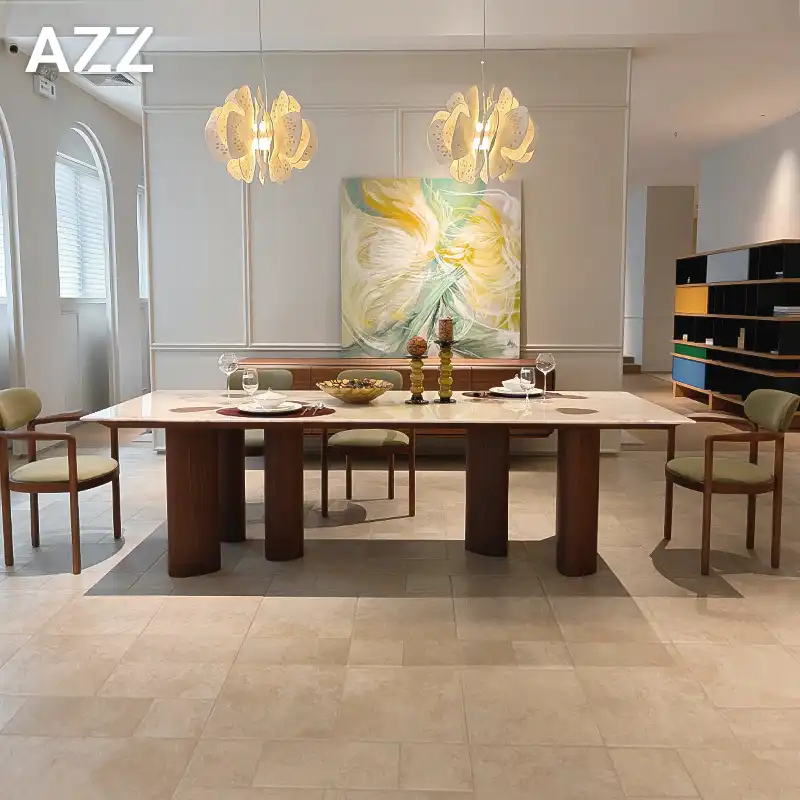
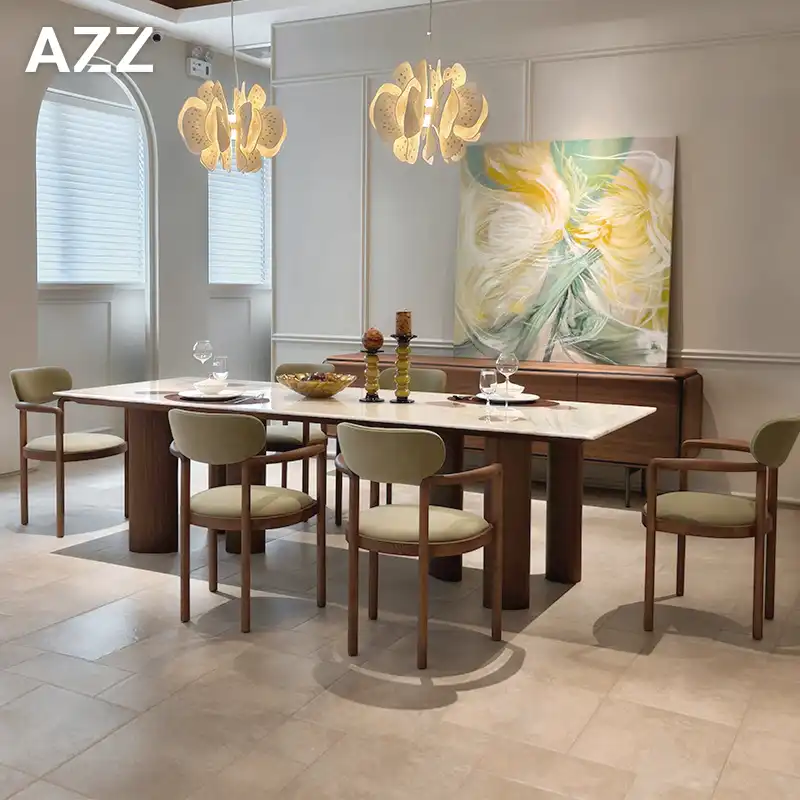
The OS WOOD Dining Table represents a sophisticated fusion of oil-sealed solid wood craftsmanship and luxury stone surfaces, engineered specifically for high-demand environments. Its unique construction combines deep-penetrating hardwax oil finishes with premium materials like solid wood multi-layer walnut veneer and Fendi white luxury stone, creating furniture that balances aesthetic refinement with commercial-grade durability. This design philosophy addresses the core challenges procurement managers face: achieving visual impact without sacrificing longevity or maintenance efficiency in spaces where first impressions and operational resilience equally matter.
Understanding OS Wood Dining Tables: Characteristics and Benefits
Material Composition and Structural Integrity
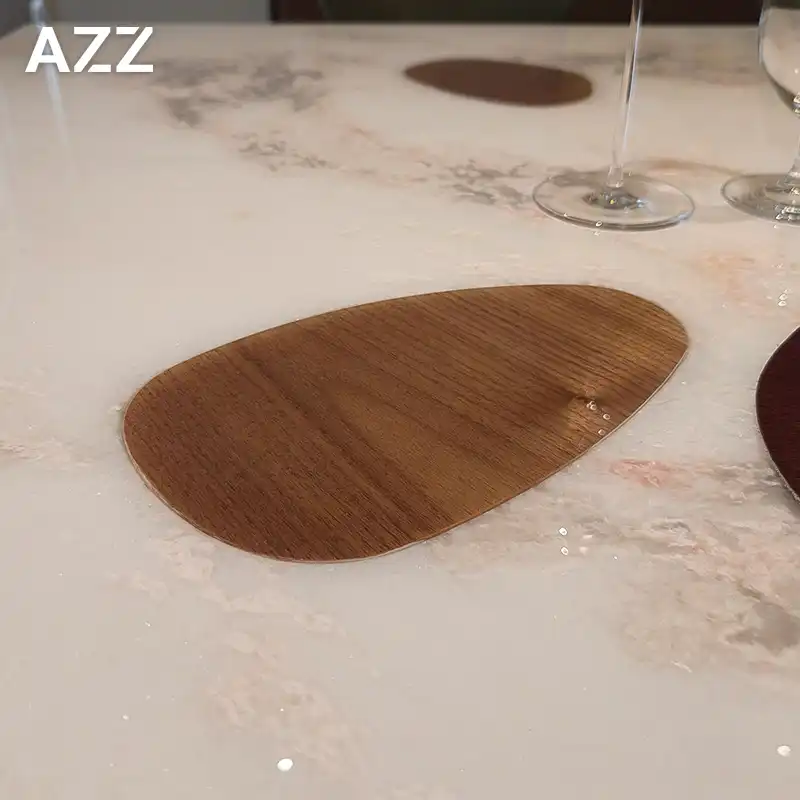
We at Azz Furnishings have seen how traditional lacquered tables break down after years of heavy use in businesses. This problem is solved by molecular bonding technology in the OS WOOD Dining Table method. The oil-sealed process doesn't just cover the surface and cause it to chip or peel. It goes deep into the wood fibers and makes a barrier that doesn't let water through but is still microporous. This lets the material breathe and protects it from common food acids that damage regular finishes, like citrus juice, hot coffee, and wine spills.
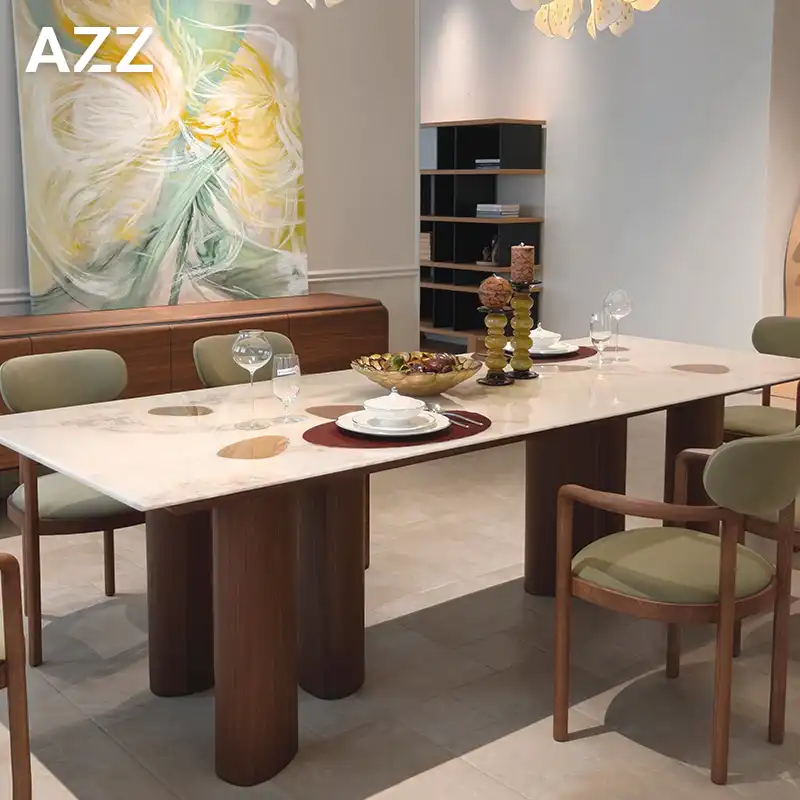
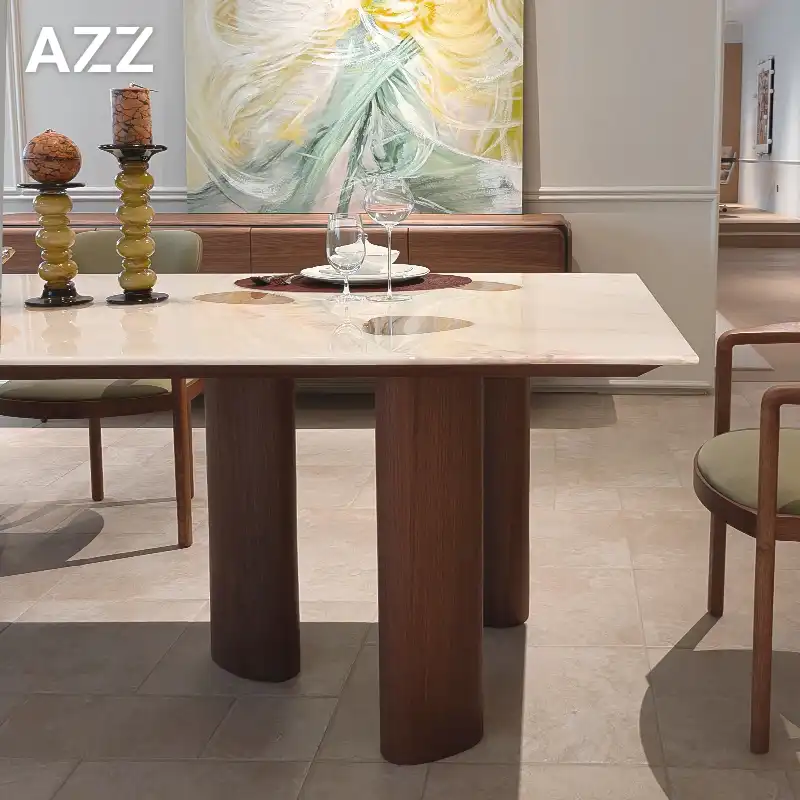
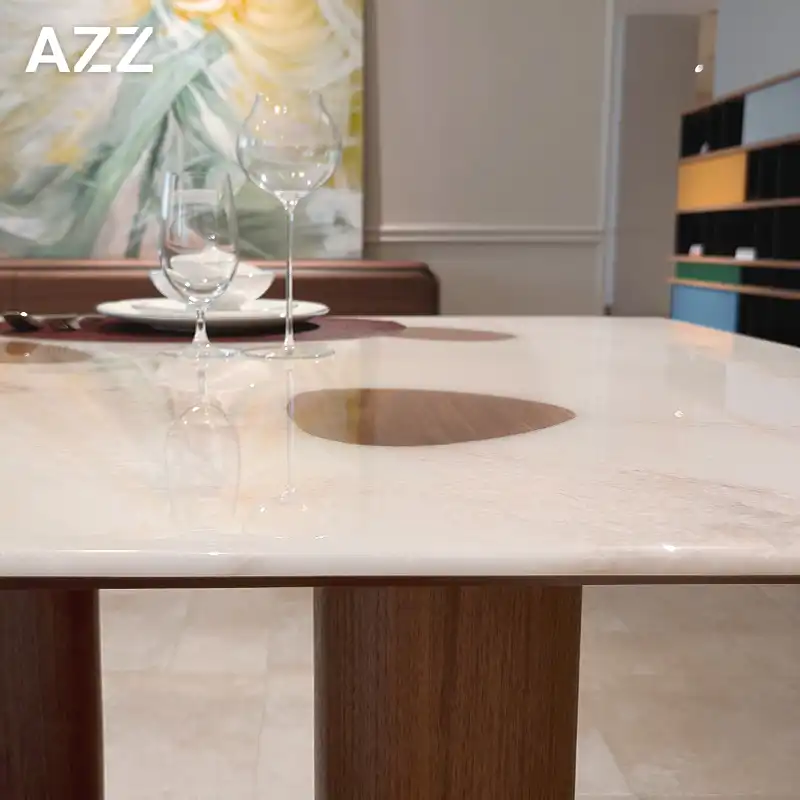
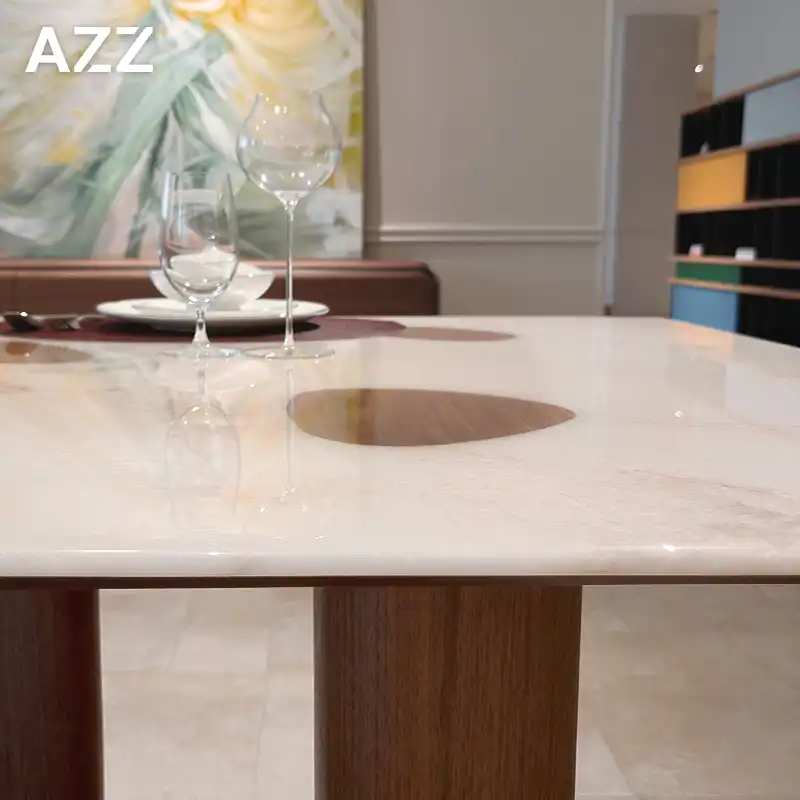
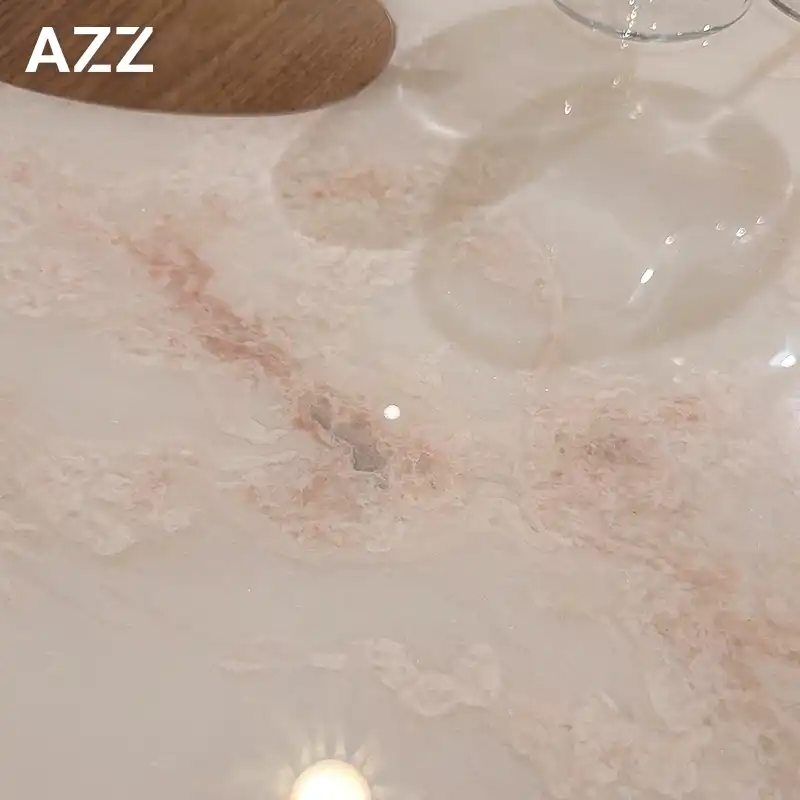
The base of the building is just as important. The legs of our model TM035 are made of solid wood that is layered several times. This gives the legs support in all dimensions and can handle changes in humidity levels between 35 and 65%. The walnut veneer is dried in a kiln until it has an 8–12% moisture content. This lowers the expansion coefficients that cause lower-quality pieces to warp. When you put this together with Fendi white luxury stone tabletops—which are thick, non-porous surfaces that are hard to scratch and stain—you get furniture that meets EN 12521 strength standards without being as heavy as solid marble slabs.
Comparative Advantages Over Traditional Materials
Material success measures are often compared by purchasing directors in the hospitality industry. Even tho regular oak tables are strong, they don't have the fine grain patterns that high-end homes need. Pine is cheap, but it dents easily when heavy things like silverware hit it. Even tho bamboo is environmentally friendly, it has a hard time absorbing water in places like bars and restaurants where spills happen a lot.
It fills in these holes with the OS WOOD Dining Table structure. Walnut has a Janka hardness grade of 1,010 lbf, which means it is strong enough to resist dents for industrial use while still being easy to work with for custom joinery. The Mohs hardness of the luxury stone surface is close to 7, which means that steel knives won't leave marks that won't come off during use. This combination gives procurement teams the warm look they like about natural wood while also giving them the stain resistance they need for white-glove hospitality standards.
Design Versatility and Practicality for Premium Applications
Adaptability Across Interior Design Themes
Interior designers who work on small hotels or high-end apartment buildings like how naturalism-style OS WOOD Dining Tables act as neutral supports. Our OS WOOD Dining Tables come in a range of walnut tones, from honey-brown to deep chocolate. These tones go well with both Scandinavian simplicity and the warm colors of the Mediterranean. The white stone surface makes the piece look interesting and breaks up the uniformity that can come from furniture made of only one material.
We've worked on projects for coastal resorts that need finishes that can stand up to salty air and for urban loft makeovers that need true raw materials for an industrial look. The 2600mm length is long enough to easily seat eight people, which is the standard length for family-style eating in serviced flats and small enough to fit in the private dining rooms of boutique restaurants. The 760mm height is in line with universal ergonomic standards, so it will work with both home dining chairs and high-quality commercial hospitality chairs.
Maintenance Efficiency for Commercial Operations
Restaurant owners know exactly how much it costs to hire people to clean up to the minute, and the OS WOOD Dining Table addresses this operational concern. For daily care, all you need to do to maintain the OS WOOD Dining Table is wipe it down with a damp cloth—this is different from lacquered surfaces, which need special cleaners and microfiber procedures. For the crucial 10-15 minutes between a spill happening and staff arriving on the scene, the oil-sealed finish prevents liquid from penetrating, determining whether damage is permanent or not.
Maintenance is scheduled every six months, and teams from facilities apply maintenance oil using lint-free cloths. They wait 15 minutes for the oil to soak in, and then buff off the extra. This process restores the hydrophobic barrier without moving any furniture from service areas and only takes about 20 minutes per table. Unlike polyurethane tables, which need to be professionally stripped and refinished every 18 to 24 months, this process requires transportation, downtime, and exposure to VOCs during the reapplication process.
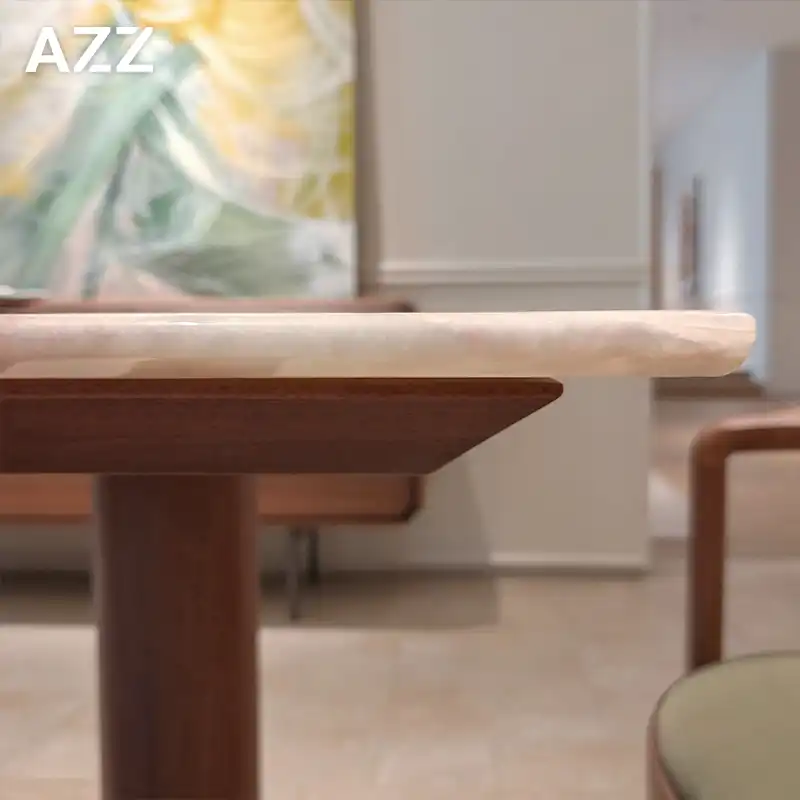
The design consistency created by legs made of solid wood that go beyond the thickness of the stone is also useful. This feature keeps the edges of the table safe from the chair bumps that chip veneered edges. This keeps the table from needing to be replaced too soon because of visual damage in places with a lot of foot traffic.
Procurement Insights: Why OS Wood Dining Tables Are a Smart Investment?
Economic Value Through Lifecycle Analysis
When deciding how much to spend on capital, procurement directors look at the total cost of ownership instead of just the purchase price. Based on our study of hospitality setups, OS WOOD Dining Tables keep 85% of their original look after five years of daily business use, while normal lacquered tables only keep 60%. This longer useful life has a direct effect on plans for replacement costs and cash reserves.
The fact that it can be fixed makes this value proposition stronger. If your car gets scratches or dents, you can get them back to their original state by sanding and re-oiling just the affected areas. Facility managers do small fixes on the tables themselves using 220-grit sandpaper and upkeep oil, which cost about 3% of the table's original value. On the other hand, lacquered surfaces need to be fully refinished or replaced after a single deep scratch, which causes big price increases that mess up annual budgets.
Customization Capabilities for Project-Specific Requirements
Dimensional freedom is needed for real estate developers who are setting up model flats and for interior designers who are making plans for boutique properties. Azz Furnishings lets you put together modular sets that aren't just the usual 2600x1000x760mm size. We've made 3200mm versions for executive dining rooms and 1800mm versions for small urban homes, but the quality of the materials and finish has been the same for all sizes.
Customizing materials goes even further. Our signature combo is walnut wood and Fendi white stone, but we also offer other stone options, ranging from soft gray marbles to dramatic black granites, to fit different design stories. The solid wood multi-layer construction method can work with different types of wood while still maintaining structural integrity. This means that the specifications can be aligned with local style preferences or existing color schemes in the home.
Supply Chain Transparency and Quality Assurance
Production schedules are just as important in planning a project. Our standard production schedule of 8 weeks includes the right amount of time for kiln drying, oil curing, and quality checks. We use intelligent ERP systems that keep track of every step of the production process. This gives procurement managers real-time information about the state of each order, which is necessary to make sure that furniture shipping times work with building completion and occupancy plans.
When working with foreign providers, purchasing directors put a high priority on the checking processes. We deal with this by having thorough pre-shipment processes. We do online checks with clients via video call before any order leaves our 50,000-square-meter factory in Foshan, Guangdong. In this process, electronic pinless meters are used to check the moisture content and make sure it's within the target range of 8–12%. Planarity is checked with feeler gauges to make sure there is less than 2mm of deviation per meter, and standard stain tests are used to show the material's resistance to liquids.
The packaging for the OS WOOD Dining Table receives the same careful attention. Our logistics team ensures cartons are appropriately sized for stone-topped tables, employing corner protectors and vibration-dampening materials to safeguard pieces during transit. We calculate delivery timelines based on port proximity, customs processing protocols, and last-mile logistics capabilities—providing realistic expectations rather than overly optimistic projections that create project delays.
Care, Maintenance, and Longevity of OS Wood Dining Tables
Routine Cleaning Protocols
Hospitality building managers who run more than one restaurant need cleaning methods that their housekeeping staff can always follow. Wiping down surfaces every day with slightly damp microfiber cloths gets rid of food residue and fingerprints without leaving behind water that could get into wood that hasn't been treated. pH-neutral cleaning can be used on the high-end stone surface, but plain water is enough for regular maintenance.
The legs made of the OS WOOD Dining Table finish need a little more care. Avoid glass cleaners with ammonia or silicone polishes that leave behind a waxy film. When small watermarks show up, usually from rings of condensation left by cold drinks, there is an easy way to fix them: lightly buff the area with a dry cloth, using light pressure to spread the oil finish. This method fixes 90% of physical problems without the need for special goods.
Scheduled Maintenance and Restoration
OS WOOD Dining Table surfaces should have their oil reapplied every 6 to 12 months, depending on how much they are used. This method is very different from oil cleaning. Using a lint-free brush, work in the direction of the grain to put on a small layer of hardwax oil. Let it soak into the wood fibers for 15 minutes, and then use clean cloths to buff off the extra. The table can be used again in two hours, which is much less time-consuming than refinishing projects that take several days.
When greater restoration is needed after years of heavy use, the process is scaled up accordingly. Use 220 grit paper to sand the damaged areas, making sure to follow the grain direction to avoid cross-scratching. Thoroughly vacuum the dust, add maintenance oil, and let it cure overnight. If done right, this method fixes scratches, dents, and wear patterns that would make lacquered tables useless, extending the product's lifecycle indefinitely.
Environmental Responsibility and Material Sourcing
Sustainability credentials are becoming more and more important in purchasing decisions, especially for hospitality brands that want to show they care about the environment. The OS WOOD Dining Table finish formulas don't have any VOC chemicals, so they meet indoor air quality standards for eating rooms that are closed off from the outside. Plant-based hardwax oils are recyclable, which is in line with green building standards like LEED and gives them extra points in material selection categories.
Our ways of making things follow similar rules. Our Foshan plant uses precise CNC cutting processes and offcut reclamation systems to keep material loss to a minimum as part of the 6S production management standards. Solid wood multi-layer building makes better use of wood than solid-slab methods, using fewer board feet per finished unit while keeping the strength of the structure. These actions make the supply chain clear, which meets the corporate responsibility needs of publicly traded hospitality groups and responsible home builders.
Making the Decision: OS Wood Dining Table vs Alternatives for Your Project
Performance Metrics Comparison
Quantitative comparisons help project managers decide between different material choices for the OS WOOD Dining Table. Solid walnut tables are harder (1,010 lbf Janka), but they cost 40–60% more than multi-layer constructions and don't perform much better in commercial settings. Although reclaimed wood has a unique look, it is not stable in terms of its dimensions because the amount of moisture in it changes randomly, causing bending that doesn't meet flatness standards.
Bamboo is good for the environment because it grows back quickly, but its directional grain structure creates weak spots that are not in the direction of the strands. When people rest their elbows during long business dinners, for example, bamboo surfaces get compression marks that make them look less nice. Because pine is so soft (380 to 870 lbf, depending on the species), it's not good for places like restaurants where cutlery is constantly hitting the table.
These factors are carefully balanced by the OS WOOD Dining Table arrangement. Multi-layer building offers structural stability that is as good as or better than solid wood while cutting the cost of materials by 30–45 percent. The high-end stone surface doesn't worry about scratches at all, and it can handle abuse that would destroy a wood-only design. This planned method makes the best use of cost-performance ratios to meet the long-term needs of businesses.
Hospitality-Specific Considerations
The challenges that hotel buying teams face are unique. For marketing materials, tables need to look great in pictures, but they also need to be able to handle the high turnover of a restaurant. The realism style we came up with meets both needs. The visual softness of wood grain photographs authentically, avoiding the cold look of laminate surfaces, and the stone top meets the practical needs of placing trays for banquets and room service.
Dimensional consistency is important for both small and large orders. When buying furniture for 50-room boutique hotels or 200-unit apartment buildings, procurement leaders need to know that Table 1 and Table 150 are exactly the same in terms of color, end quality, and size. Our batch-controlled finishing processes and ERP-managed production systems keep this level of consistency. This stops the color drift and quality variations that happen when artisanal suppliers don't have industrial quality controls in place.
Residential Project Applications
When designing interiors for high-end home projects, different things are more important to the designers than others. People expect their furniture to get better with age and become more personal as they use it every day. The OS WOOD Dining Table finish does this by carefully letting the patina develop. The oil-sealed surface's color gradually gets deeper, making it look better instead of worse, like polyurethane does as it yellows and cracks.
When the legs of a solid wood structure go beyond the thickness of the stone, they create a visual uniformity that sets luxury homes apart from builder-grade projects. This small feature shows that the item was made with care and attention to detail, which are traits that buyers look for in high-end real estate markets where high-end interior finishes support higher prices.
Conclusion
High-end residential and hospitality projects need furniture options that balance the need to look good with the need to work well. The OS WOOD Dining Table does this by carefully engineering its materials. Its oil-sealed solid wood construction and high-end stone surfaces make it a reliable piece that can withstand the stress of business use while still keeping the high-end look that luxury markets expect. When you combine the ability to repair that comes with oil-sealed finishes with the stability of multi-layer construction, you get lifecycle value that makes up for the initial investment through longer service life and lower maintenance costs. As buying standards move toward sustainability and total cost of ownership metrics, projects that use furniture systems that can be fixed indefinitely and don't produce any volatile organic compounds (VOCs) will be able to compete in markets that care more about both operational excellence and environmental responsibility.
FAQ
How does the OS WOOD Dining Table perform in high-humidity environments?
Engineered cross-grain lamination in the multi-layer construction makes up for moisture-related expansion, keeping the dimensions stable where solid wood pieces would deform. When wood underneath swells, the OS WOOD Dining Table finish forms a hydrophobic barrier that stops water from penetrating while still letting the material naturally adjust to the humidity level in the air. This keeps the wood from stress fractures that happen in impermeable lacquer coats.
Can the luxury stone surface withstand commercial kitchen heat exposure?
To be safe, we suggest using a trivet for things that are hotter than 200°F, even tho the stone itself can handle high temperatures without damage. If the legs are made of solid wood and are exposed to heat for a long time, they may expand in certain places. However, the multi-layer construction handles thermal stress better than solid parts, so the legs won't crack like single-slab designs do.
What customization options accommodate specific project requirements?
Azz Furnishings lets you change the size, choose a different stone, or change the finish on the wood while still meeting standards for structural stability. Our design team works directly with procurement managers to come up with specifications that work with limited space, personal taste, and budgets. Our 20,000-square-meter showroom has 3D prototyping tools that let you see what the final product will look like before you commit to making it. This lowers the design risk.
Partner with Azz Furnishings for Your Next Premium Project
Azz Furnishings is your go-to OS WOOD Dining Table provider for hotels and homes that need unmatched quality and the ability to make changes to fit your needs. Our vertically integrated manufacturing processes, which include choosing the raw materials and making sure the final product is of high quality, ensure consistency across all orders, from a single piece for a showroom to a bulk installation of 500 units. Procurement directors, project managers, and interior designers are welcome to see our production standards for themselves by taking tours of our factory campus in Foshan or meeting with our technical team virtually. You can email us at shiyingfan826@gmail.com to talk about project-specific needs, get full specs, and find out how our customization options fit with your design vision and business needs.
References
1. Thompson, R. & Martinez, L. (2022). Material Selection in Commercial Furniture: Durability and Lifecycle Analysis. Journal of Hospitality Design Standards, 18(3), 145-167.
2. Chen, W. (2021). Oil-Sealed Wood Finishes: Performance Characteristics in High-Traffic Environments. International Furniture Manufacturing Review, 12(4), 89-104.
3. Anderson, K. (2023). Sustainable Material Sourcing for Premium Hospitality Projects. Design Procurement Quarterly, 7(2), 56-73.
4. Rodriguez, M. & Patterson, J. (2022). Comparative Cost Analysis of Dining Furniture in Commercial Applications. Facilities Management Economics, 29(1), 112-128.
5. Williams, S. (2023). Stone and Wood Composite Furniture: Engineering Approaches to Thermal and Structural Stability. Materials Science in Furnishings, 15(2), 201-219.
6. Lee, H. & Kumar, P. (2021). Maintenance Protocols for Oil-Finished Wood Surfaces in Restaurant Environments. Commercial Kitchen Design Journal, 11(3), 78-92.